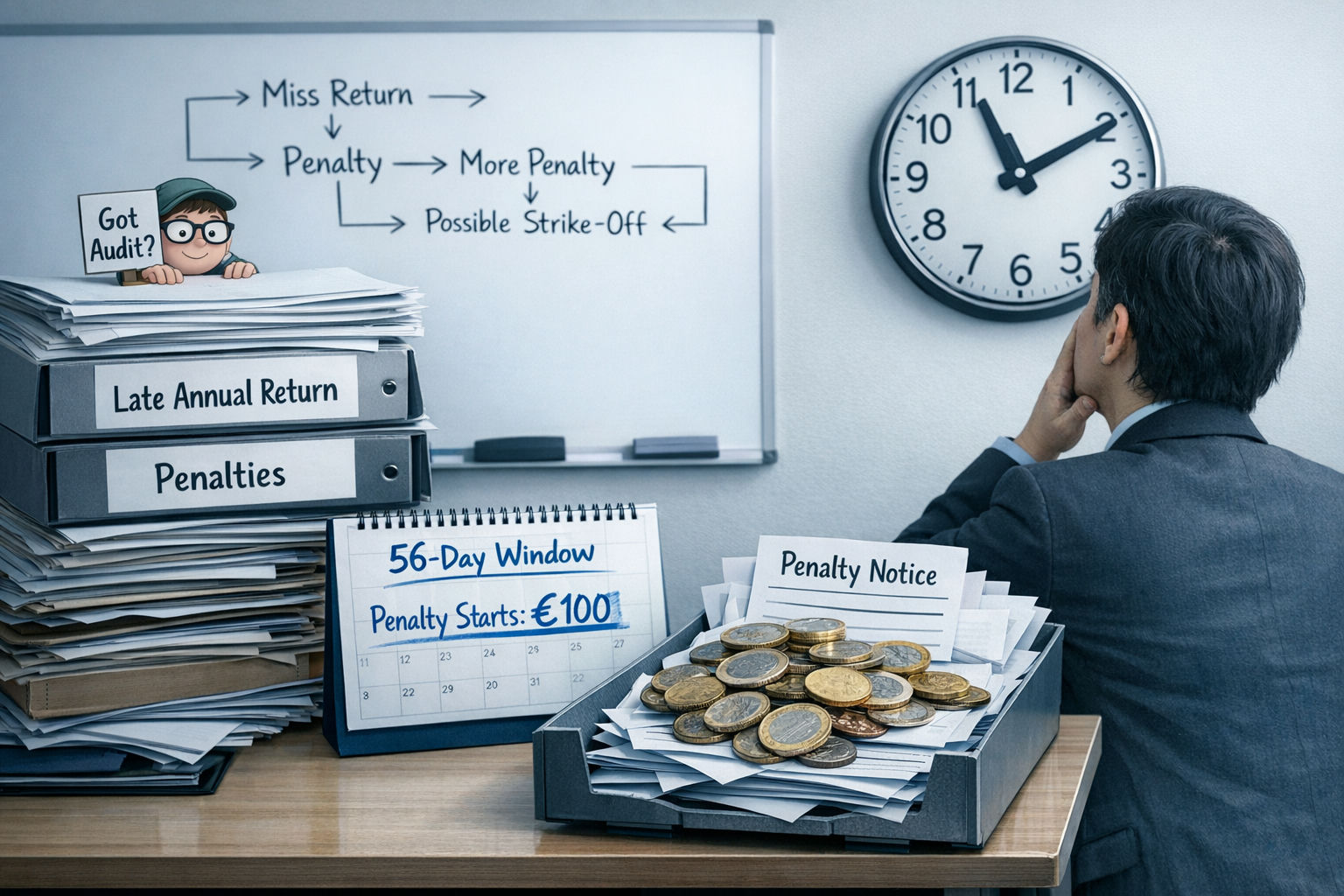
This article is for Irish company directors and founders who have missed their CRO annual return deadline or are worried they might miss it.
If you're facing late filing penalties, wondering how serious the consequences are, or need to clean up your compliance record before fundraising, this guide covers the exact penalty structure, how to avoid losing your audit exemption, and the steps to get back on track before strike-off proceedings begin.
Key Takeaways
• Late annual returns trigger an automatic €100 penalty plus €3 daily, reaching a maximum of €1,200 after 367 days.
• Filing late for two consecutive years costs your audit exemption for two years, adding at least €4,000 in audit fees.
• File immediately within the 56-day window even without accounts ready; you can attach financial statements within 28 days after.
• The CRO will initiate strike-off proceedings for extended non-compliance, causing the company to cease existing as a legal entity.
• Clean up all outstanding filings before fundraising as late filing history raises red flags and can affect valuation or terms.
Laura Ryan is a practising Barrister at the Bar of Ireland. She graduated from the Honourable Society of King’s Inns in 2024, having previously qualified and practised as a Chartered Accountant in a big four accounting firm.
A €100 penalty applies automatically on day one of lateness, followed by €3 per day until you file, up to a maximum of €1,200. The CRO has no discretion to waive this penalty, and you must pay it before they'll accept your late filing.
Is there a grace period after my annual return date?
Yes, you have 56 days from your Annual Return Date to file without any penalty. Once those 56 days pass, the €100 penalty kicks in immediately and the daily €3 charge begins accumulating.
What's the hidden cost of filing late that most founders miss?
If you file late two years in a row, you automatically lose your audit exemption for the following two years. This typically costs at least €2,000 per year in audit fees, meaning a minimum additional €4,000 on top of any late filing penalties.
Can I file my annual return without the financial statements ready?
Yes, if you're still within the 56-day window, you can submit the annual return first and attach the financial statements within 28 days. This is the single most important action to take if you're running close to the deadline.
What happens if I don't file for an extended period?
The CRO will begin strike-off proceedings by publishing a notice in the CRO Gazette. If you don't act, your company will be struck off the register and cease to exist as a legal entity, meaning it can no longer trade, hold assets, or enter contracts legally.
Can I restore a company that's been struck off?
Yes, but it's neither quick nor cheap. Administrative restoration is only available within 12 months of strike-off and requires all filings to be current and all penalties paid. After 12 months, you'll need a court order, which involves legal costs and can take several months.
Will late filings affect my ability to raise investment?
Late filings are red flags for investors and will be discovered during due diligence. While they won't necessarily prevent a deal, they will slow it down, invite harder questions, and may affect your valuation or investment terms.
How do I clean up my compliance history before fundraising?
File all outstanding annual returns immediately and pay accumulated penalties, bring all financial statements up to date, and confirm your next Annual Return Date with the CRO. Allow sufficient time before the fundraise for filings to be processed and reflected on the public register, and be transparent with investors about past issues.
How can I prevent missing deadlines in the future?
Set calendar reminders for your Annual Return Date and the end of the 56-day window, appoint a professional company secretary to monitor obligations, and ensure your accountant has financial statements ready well in advance. One missed deadline is recoverable, but a pattern of missed deadlines is a governance problem investors take seriously.