Irish companies and sole traders planning to import or export goods from or to outside the EU, including trade with Great Britain after Brexit, will find this guide essential.
Founders will learn the exact registration process through ROS, who needs an EORI, special cases, common pitfalls and related compliance steps to avoid costly shipment delays.
EORI Registration Ireland: Practical Business Guide
EORI registration Ireland is one of the first customs steps to check if your business imports or exports goods into or out of the European Union.
An EORI number is not a tax registration in the ordinary sense. It is a customs identifier. If your business needs to move goods across customs borders, freight forwarders, customs agents and Revenue may need that number before the shipment can be cleared.
What is an EORI number?
An EORI number is an Economic Operators Registration and Identification number used to identify traders in customs systems.
Revenue explains that traders who import or export goods into or out of the EU need an EORI number, and that the number is valid throughout the EU. The European Commission describes EORI as mandatory for customs clearance in the EU customs territory, including import, export and transit operations.
For Irish businesses, the EORI is linked to Revenue's systems and used as a common reference number when dealing with customs authorities in EU Member States. For an Irish company, the EORI number is normally IE followed by the company's VAT number . For a sole trader without a VAT registration, it follows the tax reference number. Either way, the format is the country prefix IE plus the trader's identifier.
The practical point is simple: customs systems need to know who the trader is. The EORI number provides that identifier.
Who needs an Irish EORI?
Irish businesses generally need an EORI number if they import or export goods into or out of the EU.
This includes companies buying goods from outside the EU, selling goods to customers outside the EU, or moving goods where customs declarations are required. Since Brexit, many Irish businesses first encountered EORI when moving goods between Ireland and Great Britain.
You may need an EORI if your business:
Imports goods from outside the EU
Exports goods outside the EU
Moves goods between Ireland and Great Britain
Uses a freight forwarder or customs agent
Makes customs declarations
Applies for certain customs simplifications
A service-only business that does not move goods will generally not need one for ordinary service sales. But if that business later imports equipment, stock or samples, the position may change.
If your trade also involves VAT, our guide to Value Added Tax for new Irish companies gives useful context on the wider tax setup.
How do you register for an EORI in Ireland?
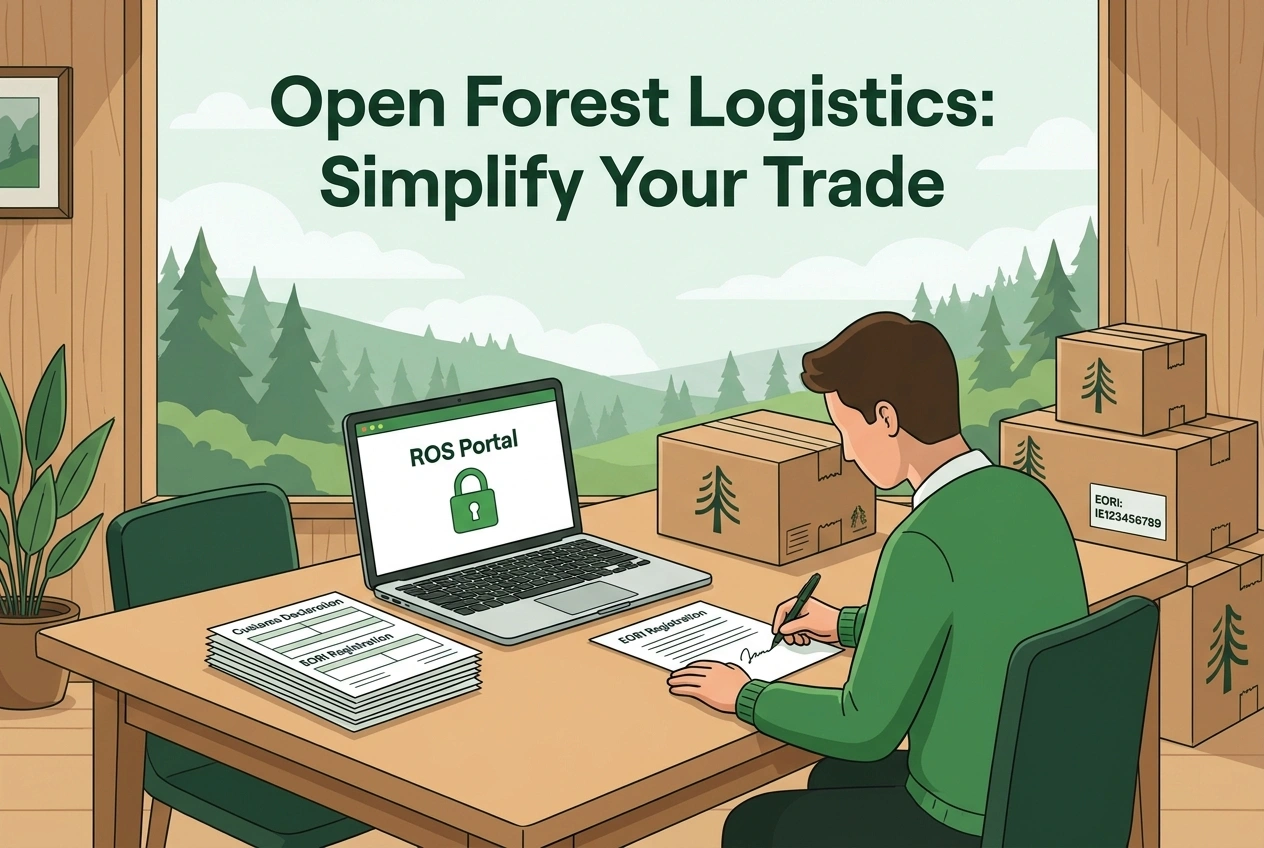
Irish EORI registration is handled through Revenue Online Service .
Before applying, Revenue says you need to be registered for ROS. Revenue also notes that an Eircode is mandatory in all EORI registrations, including new and existing registrations, to avoid customs declarations being rejected.
The usual steps are:
Confirm the legal entity that will trade
Make sure the business is registered for ROS
Check the official address and Eircode in ROS
Apply for EORI registration through Revenue's online process
Share the EORI with your customs agent or freight forwarder
Keep the registration details aligned with the company's tax records
For companies, the EORI should match the legal entity that is importing or exporting. If a group has multiple companies, do not assume one EORI covers every entity without checking the structure.
Author's tip: Apply before your first shipment is ready to move. Waiting until goods are at the border can create avoidable delays, storage charges and pressure on your freight forwarder.
How is an EORI used in practice?
An EORI is used on customs declarations and in interactions with customs authorities.
Your freight forwarder or customs agent will usually ask for it before preparing import or export paperwork. It may appear on customs declarations, shipping documents and correspondence about duty, VAT or customs checks.
An EORI can be used across the EU, but it belongs to a specific economic operator. That means you should keep it consistent with your VAT, customs and company details.
If your company imports goods, the customs position may also interact with tax compliance , VAT accounting, postponed accounting and record retention.
For some businesses, EORI is only the first step. Depending on the trade, you may also need:
VAT registration
Customs and excise registration
Commodity codes
Import VAT processes
A deferred payment account
Freight forwarder authority
Import or export licences for restricted goods
What special cases should founders watch?
The EORI should sit with the correct legal person, not simply whoever arranged the shipment.
For a sole trader, the registration follows the individual trader. For a company, it follows the company. If a founder imports goods personally before the company is ready, that may create confusion about ownership, VAT recovery and accounting records.
Non-EU businesses may have different requirements depending on where they are established and where customs activity takes place. If a non-EU founder sets up an Irish company, the Irish company may need its own EORI once it starts importing or exporting goods.
Our guide on how to open a company in Ireland as a foreigner may help if the EORI question is part of a wider Irish setup.
The same principle applies to groups. One company should not casually use another company's EORI just because they have common ownership. That can create customs and accounting issues.
What are the common EORI mistakes?
The most common EORI mistake is leaving registration until the first shipment is already in motion.
Other common issues include:
Missing Eircode in ROS profile details
Using the wrong legal entity
Assuming VAT registration automatically solves customs registration
Giving the freight forwarder an old or incorrect number
Failing to update details after company changes
Not keeping customs paperwork with the accounting records
Please note: An EORI number helps customs identify your business. It does not replace VAT registration, import documentation, commodity classification or the need to keep proper import and export records.
Customs records should form part of your wider company records , especially where imported goods affect stock, VAT, duties or cost of sales .
We have seen founders discover they need an EORI number when their freight forwarder calls to say goods are sitting at Dublin Port and cannot be cleared. At that point, registration becomes an emergency instead of a five-minute job. The storage charges alone can exceed the cost of the goods. Apply the moment you know you will be importing: even if the first order is months away
What related registrations should you consider?
EORI registration should be reviewed alongside VAT, customs processes and your trading model.
If your company is newly incorporated and plans to trade in goods, ask these questions early:
Will goods move into or out of the EU?
Will you trade with Great Britain?
Are you VAT-registered or approaching the threshold?
Who will act as customs agent?
Will import VAT be payable?
Are licences needed for the goods?
How will duties and freight costs be recorded in the books?
A company dealing with goods should also understand its broader business structure in Ireland and how the chosen legal entity affects tax, accounting and responsibility for customs obligations.
Need EORI registration handled with company setup?
Open Forest can help align EORI, VAT and tax registrations so your company is ready to trade before the first shipment is due.
What to do next
If your Irish business will import or export goods, check EORI registration before arranging the shipment.
Make sure ROS access is active, your Eircode is recorded, the correct legal entity applies and your freight forwarder has the right details. Open Forest can help you handle EORI registration alongside company setup, VAT registration and the wider compliance steps needed to trade with confidence.




%20(1).webp)