This article is for Irish sole traders earning over €50,000 annually who are considering converting to a limited company structure.
If you're wondering whether incorporation makes sense for your business and how to actually make the switch without creating tax problems or losing clients, this guide covers the complete conversion process—from registering your company and transferring assets to handling existing contracts and optimizing how you pay yourself afterward.
Key Takeaways
• You must register for corporation tax within one month of the company starting to trade to avoid penalties.
• Transferring business assets to your company may trigger 33% capital gains tax, potentially reduced to 10% with Entrepreneur Relief.
• Existing contracts don't automatically transfer; you need client consent for novation or assignment to the new company.
• Combining a modest salary with dividend payments typically provides the most tax-efficient structure for director-shareholders after incorporation.
• Limited company structure becomes tax-efficient beyond €50,000 annual income, with corporation tax at 12.5% versus progressive income tax rates.

Why Would You Convert from Sole Trader to Limited Company?
The tax efficiency of operating through a limited company becomes increasingly compelling as your annual income rises beyond €50,000.
Limited liability protection is another major benefit, as it creates a legal separation between business debts and your personal assets.
The corporate structure also improves your business credibility, particularly when you're tendering for larger contracts or dealing with corporate clients.
Access to investment becomes easier with a limited company structure, as you can issue shares and create formal ownership arrangements that aren't possible as a sole trader.
The sole trader business and the limited company remain separate legal entities throughout the process, which has significant implications for contracts, tax obligations, and liabilities.
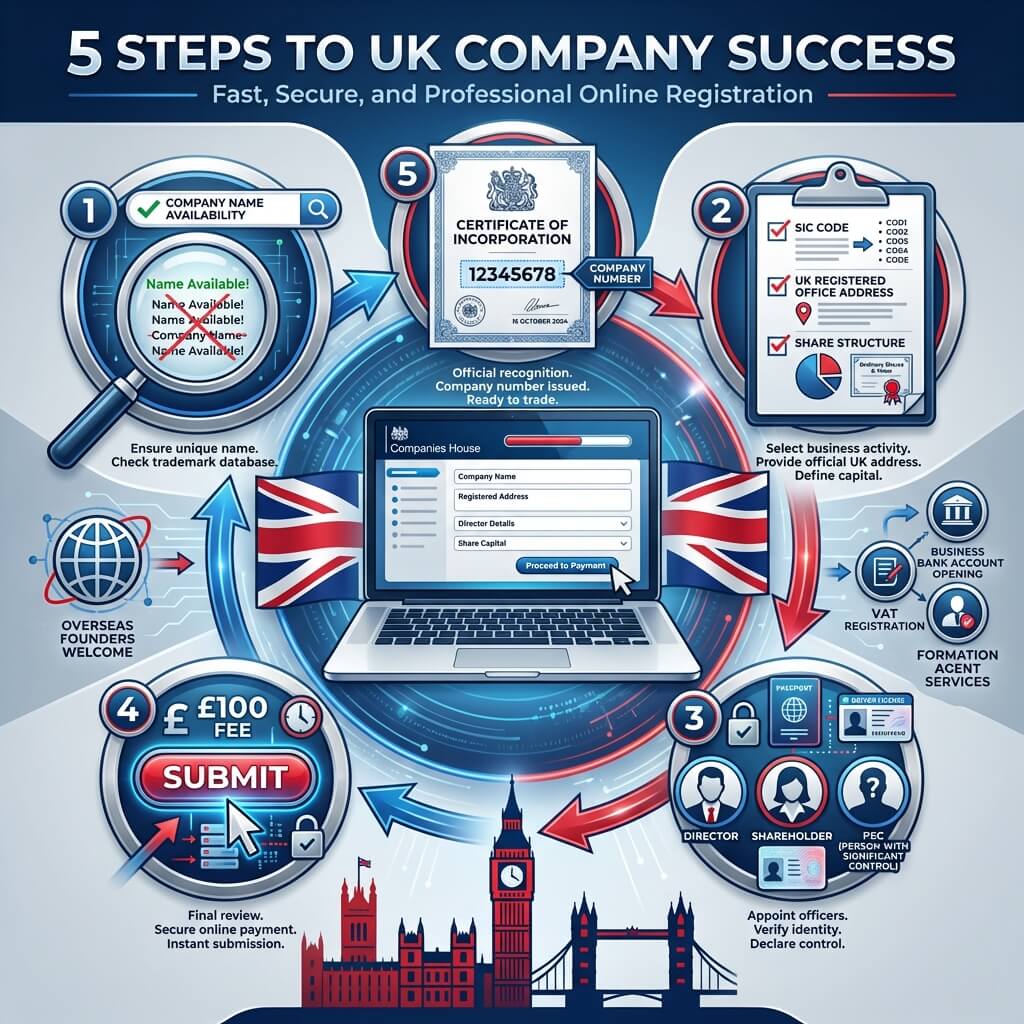
Step 1: Incorporate Your New Limited Company
The first step is to register a private limited company with the Companies Registration Office (CRO).
You'll need at least one director who is an EEA resident, or alternatively you can purchase a Section 137 bond if no EEA-resident director is available.
Choose a company name that's available in the CRO database and complies with their naming requirements - you can check availability on the CRO website.
Your new company also needs a registered office address in Ireland where official correspondence can be sent.
Required Documents for Incorporation
The incorporation process requires a Constitution that defines your company's internal rules, governance structure, and share capital arrangements.
You'll need to complete Form A1 and submit it to the CRO with details about your directors, company secretary, and registered office.
The share capital structure you establish during incorporation determines the initial ownership arrangements and provides flexibility for future growth.
Step 2: Set Up Corporate Banking and Tax Registrations
Opening a business bank account in the company's name is one of your first priorities after incorporation is complete.
You must register for corporation tax within one month of the company commencing trading activities - this deadline is strictly enforced by Revenue.
VAT registration becomes mandatory if your annual turnover exceeds €42,500 for services or €85,000 for goods, though voluntary registration may benefit your business.
Setting up PAYE is necessary if you plan to pay yourself a salary, which most directors do for tax efficiency reasons.
Tax Registration Timing Considerations
The corporation tax registration must occur within one month of the company starting to trade - late registration can result in penalties.
VAT registration becomes mandatory once the relevant thresholds are exceeded, though many businesses register voluntarily to reclaim input VAT on expenses.
PAYE registration must be completed before you process your first salary payment to avoid compliance issues.
Consider whether voluntary VAT registration makes sense for your business, as it allows you to reclaim VAT on business expenses even if your turnover is below the mandatory threshold.
Step 3: Transfer Business Assets to the Company
All business assets must be formally transferred from you personally (as the sole trader) to the new limited company. The transfer method you choose - whether purchase or capital contribution - affects the tax treatment and your future relationship with the company.
Physical Assets and Equipment
The transfer of physical assets requires proper documentation that clearly shows the change in ownership from you to the company.
Consider obtaining an independent valuation for significant assets to establish a fair market value for the transfer price.
The company can purchase these assets from you at fair market value, giving you cash while creating a tax-deductible expense for the company.
Intellectual Property and Goodwill
Any trademark registrations in your name must be formally assigned to the company through the appropriate intellectual property office.
Copyright in existing work, designs, and creative materials should transfer through written assignment agreements that clearly document the change in ownership.
Business goodwill represents the significant value in your customer relationships, reputation, and market position - this requires careful valuation.
Stock and Inventory
Physical stock and inventory can transfer to the company at either cost value or current market value, depending on your tax planning strategy.
Document the transfer with detailed inventory lists that specify quantities, descriptions, and the agreed valuation for each item.
Be aware of potential stamp duty implications if the total value of transfers exceeds certain thresholds set by Revenue.
Step 4: Handle Existing Contracts and Obligations
Your existing contracts remain with you as the sole trader unless they're formally transferred to the new company - this doesn't happen automatically.
There are three main options for handling ongoing contractual obligations during the conversion process: novation, assignment, or letting contracts expire naturally.
Contract Novation
Novation creates an entirely new contract between your limited company and the client, releasing you from the old sole trader contract.
All three parties - you as sole trader, the company, and the client - must agree to release the old contract and create new contractual terms.
This approach provides the cleanest break from your sole trader obligations, as you're completely released from the original contract.
Contract Assignment
Assignment transfers your rights and obligations under the existing contracts from you personally to the company.
The other party must typically consent to assignment, though this depends on the specific terms in your original contracts.
Review your original contracts carefully for clauses that restrict or prohibit assignment, as these can complicate the transfer process.
Step 5: Notify Key Stakeholders About the Change
Informing Revenue of your business structure change is essential to ensure both entities are properly registered and your tax affairs remain compliant.
Your existing clients need formal notification about the new company entity and what it means for their ongoing relationship with your business.
Communicating with Clients
Send formal notification letters to all clients explaining the business structure change and what it means for them.
Provide complete new company details including the company registration number, VAT number, and updated contact information.
Offer novation agreements or new contracts as appropriate for their specific circumstances, making the transition as smooth as possible.
Notifying Revenue
File your final income tax return as a sole trader, covering all trading activity up to the conversion date.
The company must commence its own corporation tax filing obligations from the date it starts trading.
Close your sole trader tax registration with Revenue after all final obligations have been met and returns filed.
If you're VAT registered, the VAT registration needs to be updated or transferred to reflect the company name and structure.
What Happens to Your Tax Obligations?
Your sole trader tax obligations continue until you properly close that registration and file all required returns.
The limited company faces completely separate corporate tax obligations from the date of incorporation, creating a period where both entities may have tax liabilities.
Understanding the interaction between these two sets of obligations is crucial to avoid unexpected tax bills or compliance issues.
Income Tax vs Corporation Tax
You must complete a sole trader income tax return covering all trading activity up to the date you transfer the business to the company.
The company pays corporation tax at 12.5% on its trading profits, which is significantly different from the progressive income tax rates you paid as a sole trader.
After incorporation, you personally pay income tax on any salary you take from the company and on dividend distributions.
The timing of your conversion significantly affects which entity bears the tax liability for specific income, so careful planning can optimize your overall tax position.
Capital Gains Tax Considerations
Transferring business assets from yourself to the company may trigger capital gains tax liability on any increase in value since you acquired them.
Capital gains tax in Ireland is charged at 33% on gains realized from business asset disposals, which can create a significant tax cost.
Entrepreneur Relief may reduce the effective CGT rate to 10% on qualifying disposals, subject to a €1 million lifetime limit per individual.
VAT Implications During Transfer
The transfer of a business as a going concern may qualify as VAT-exempt, avoiding VAT charges on the asset transfers.
However, individual asset transfers that don't qualify as a going concern might attract VAT charges that increase the total cost.
Ensure you maintain continuous VAT registration throughout the process to preserve your ability to recover input tax on business expenses.
Inform Revenue of the business transfer through the proper VAT forms to ensure the transfer is treated correctly for VAT purposes.
How Should You Pay Yourself After Incorporation?
After incorporation, you become an employee of your own company rather than receiving the trading profits directly as you did as a sole trader.
The most tax-efficient payment structure typically combines a regular salary with periodic dividend payments, balancing various tax considerations.
Taking a Salary
Salary payments create a corporation tax deduction for the company, reducing its taxable profits, while you pay income tax and PRSI on the salary received.
Consider the optimal salary level by balancing tax efficiency with maintaining your social insurance contributions and pension contribution capacity.
Paying Dividends
Dividends are paid from the company's after-tax profits and represent a distribution of accumulated earnings to shareholders.
Dividends are taxed at your marginal income tax rate plus USC, though no PRSI applies to dividend income.
Optimizing Tax Efficiency
Combining a modest salary with periodic dividend payments often provides the most tax-efficient structure for director-shareholders.
A salary supports pension contributions and maintains your social insurance record for future state pension entitlement.
Dividends provide a relatively tax-efficient way to extract profits after the company has paid corporation tax at 12.5%.

Laura Ryan is a practising Barrister at the Bar of Ireland. She graduated from the Honourable Society of King’s Inns in 2024, having previously qualified and practised as a Chartered Accountant in a big four accounting firm.


.webp)
.webp)
.webp)