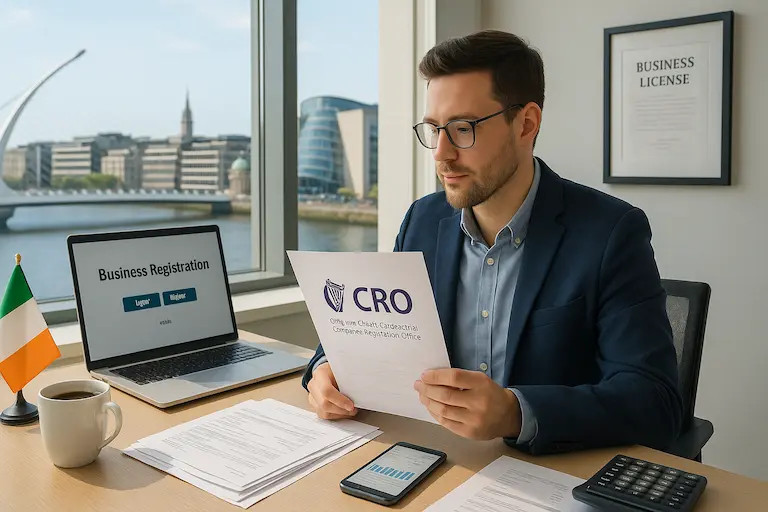
This article is for Irish company directors and business owners who need to choose or change their company name without running into legal problems.
If you're wondering whether the CRO can force you to change your name, how trademark issues might affect you, or what happens if your chosen name conflicts with existing companies, this guide covers CRO name rules, trademark infringement risks, and the complete name change process.
Key Takeaways
• The CRO can force a name change within 6 months of incorporation if your name is too similar to existing companies. • Always search the Irish Patents Office trademark register before incorporating to avoid costly infringement claims later. • You must file Form G1 within 15 days of passing a special resolution to change your company name. • Ignoring CRO name change directions can result in strike-off, and trademark injunctions often exceed €20,000 in legal costs. • Check name availability immediately before your shareholder meeting since you cannot reserve names for existing companies changing names.
Laura Ryan is a practising Barrister at the Bar of Ireland. She graduated from the Honourable Society of King’s Inns in 2024, having previously qualified and practised as a Chartered Accountant in a big four accounting firm.
How long does the CRO have to force me to change my company name?
The CRO has 6 months from your incorporation date to direct a name change if your name is "the same as or too like" an existing company. After this 6-month window expires, the CRO loses this power and you gain certainty that similarity objections won't force changes.
Can I use a name similar to another company if we're in different industries?
Yes, two companies with similar names operating in completely different industries might both be permitted because confusion is unlikely. For example, a technology company and a bakery can share similar names, but two accounting firms with similar names will face objection regardless of where they're located.
Can the CRO approve my company name even if it infringes someone's trademark?
Yes, the CRO doesn't check trademark registers before approving company names, so you can successfully incorporate but still face trademark infringement claims later. Trademark owners can seek High Court injunctions forcing you to change your name even after CRO approval, so you should search the Irish Patents Office trademark register before incorporating.
What words require special permission to use in my company name?
Government-related terms like "Government," "Authority," "Commission," or "National" require written approval from relevant government departments. Professional regulation terms like "Bank," "Insurance," or "University" require proof of proper licensing before the CRO will allow them.
How do I officially change my company name?
You must pass a special resolution (75% majority vote), file Form G1 within 15 days with applicable fees, and wait for the CRO to issue a new Certificate of Incorporation. The name change only takes effect when you receive this new certificate, after which you must update all business materials including letterhead, website, signage, and bank accounts.
Can I reserve my new company name before filing the change?
No, the CRO reservation system only works for new incorporations, not for existing companies changing names. To minimize the risk of someone else taking your desired name, pass your special resolution and file the required form on the same day after checking availability.
What happens if I ignore a CRO direction to change my name?
The CRO can strike off your company for non-compliance with name change directions under the Companies Act 2014. You also won't be able to file other documents while non-compliant, and if trademark infringement is involved, courts typically award legal costs exceeding €20,000 against you in successful cases.
Will I be personally liable if I keep using a name that infringes someone's trademark?
In extreme cases, yes—trading under a name you know infringes another's rights can create personal liability for directors who authorized continued use despite warnings. The longer you delay changing an infringing name, the higher the legal costs when injunctions finally force compliance.