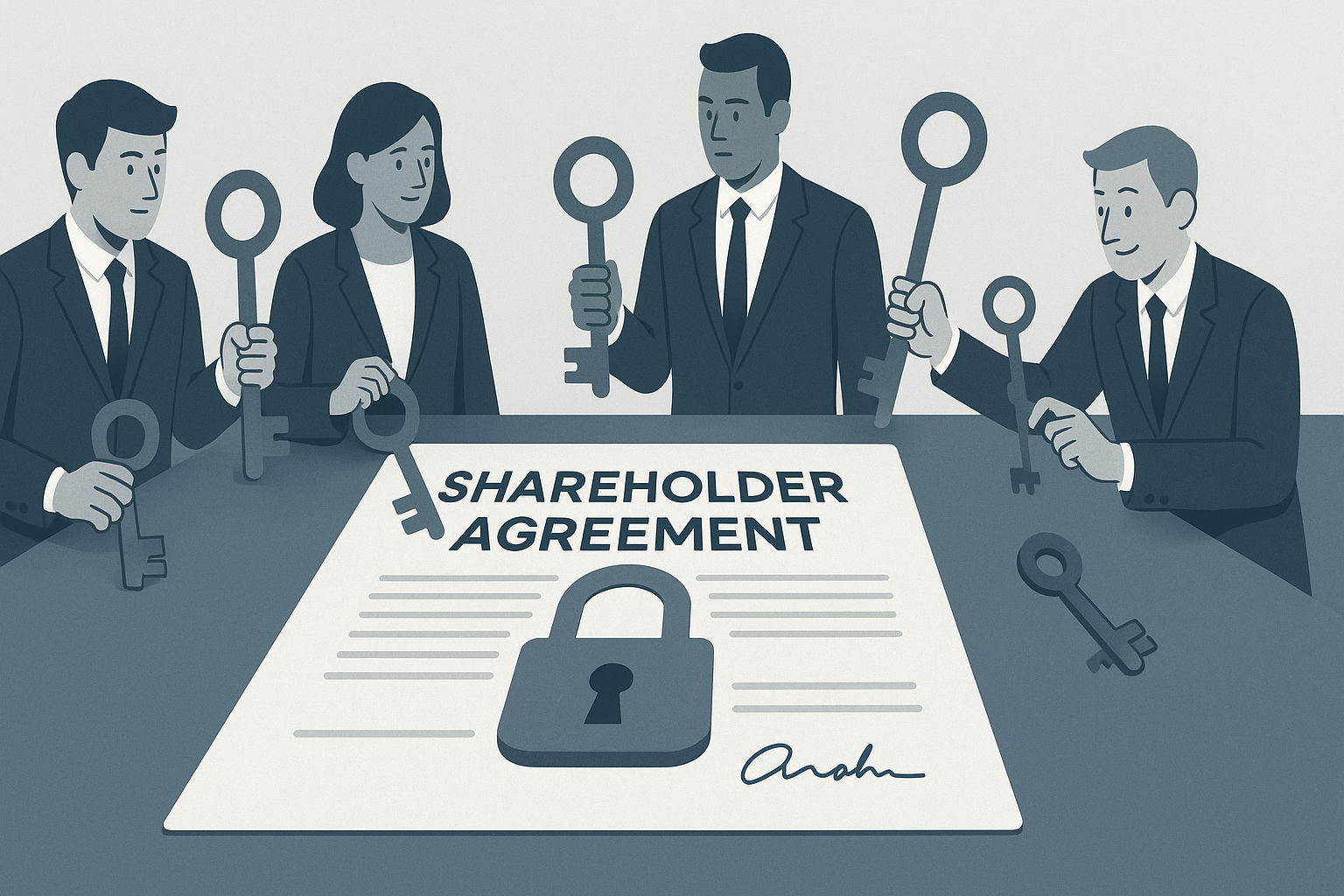
This article is for startup founders preparing for investor due diligence or currently in the fundraising process.
If you're wondering what legal documents investors will request, why missing paperwork kills deals, or how to avoid due diligence disasters, this guide covers the essential corporate documents, IP assignments, employment contracts, and compliance records you need to have ready.
Key Takeaways
• Founder IP assignment agreements must transfer all pre-incorporation and company IP to the business, signed at incorporation. • Missing contractor IP assignments kill more deals than any other issue; secure written assignments before work begins. • Every employee needs a written contract with explicit IP assignment clauses stating all work product belongs to the company. • Clean due diligence closes deals in 3-4 weeks; material issues trigger price renegotiation or complete deal collapse. • Your cap table must reconcile chronologically from incorporation with board resolutions proving each share issuance was properly authorized.
Laura Ryan is a practising Barrister at the Bar of Ireland. She graduated from the Honourable Society of King’s Inns in 2024, having previously qualified and practised as a Chartered Accountant in a big four accounting firm.
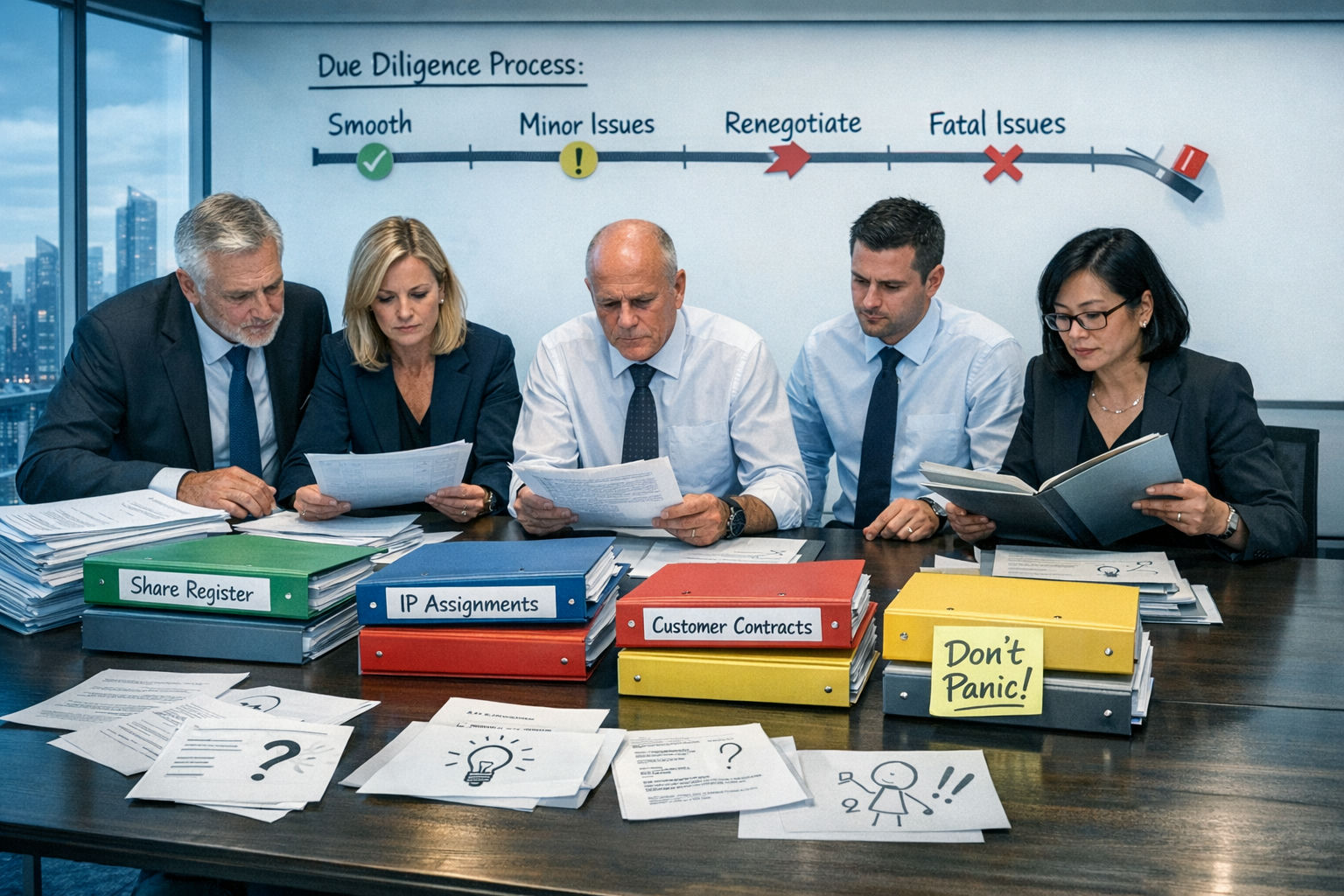
Legal due diligence typically takes 3-6 weeks from when investors sign the term sheet until they're ready to transfer funds. Clean diligence with well-organized documents can close in 3-4 weeks, while discovering issues creates delays that extend the timeline.
What happens if investors find problems during due diligence?
The outcome depends on the severity of issues discovered. Minor problems like missing signatures cause small delays while you fix them but don't affect deal terms, while material issues can trigger price renegotiation, additional protective provisions, or complete deal collapse if investors consider the problems unfixable.
Do I need signed IP assignments from every contractor who ever worked on my product?
Yes, you must have signed IP assignment agreements from every freelancer, consultant, agency, or contractor who contributed to your product, technology, or brand assets. These assignments must be signed before or immediately after the work commenced—not retroactively during fundraising—because contractors can refuse to sign later or demand payment for doing so.
What's the most common issue that kills deals during due diligence?
Missing IP assignments kill more deals than any other single issue, particularly for technology companies. Many founders assume work they do for their own company automatically belongs to the company, but without written assignment agreements, founders personally own everything they create, which represents a deal-breaker for institutional investors.
Do I need written employment contracts for my founders?
Yes, written employment contracts must exist for every employee including founders, specifying salary, benefits, job title, and termination provisions. Investors particularly scrutinize founder contracts to ensure proper vesting schedules, clearly defined roles, IP assignment clauses, and appropriate restrictions if founders leave the company.
What corporate documents prove my company legally exists and can raise capital?
You need your certificate of incorporation (proving legal existence), company constitution (defining share classes and governance rules), and certificate of good standing from the company registry. Missing or incomplete incorporation documents suggest poor corporate hygiene and raise immediate red flags about what other fundamental matters you've neglected.
Why do investors spend so much time verifying my cap table?
Investors verify cap tables extensively because inaccurate ownership records can invalidate their entire investment if they discover after closing that founders didn't actually own the percentages they represented. Your cap table must reconcile chronologically with your register of members, share certificates, and board resolutions approving each share issuance from incorporation to present.
What customer contracts do investors care about most?
Investors particularly scrutinize contracts representing more than 10% of your revenue because losing any major customer could significantly impact business performance. They examine payment terms, liability limitations, termination rights, IP ownership of customizations, and whether signed contracts support your claimed revenue recognition under accounting standards.
Can I sign IP assignments with contractors retroactively when preparing for fundraising?
While technically possible, retroactive IP assignments create serious problems during due diligence because contractors can refuse to sign or demand payment, equity, or other consideration you didn't plan to provide. This wastes weeks of due diligence time and gives contractors unexpected leverage over your fundraising process.
What compliance filings must be current before due diligence?
Your annual returns filed with the company registry must be current for all years since incorporation with no late filings or outstanding penalties. Tax registrations and filings including corporation tax, VAT, and PAYE must be complete and current with no outstanding liabilities or disputes with revenue authorities, and statutory registers must be properly maintained.




.webp)