Small Irish employers, HR professionals, and managers handling employee remote working requests under the Work Life Balance Act 2023.
Readers will learn exact rules, timelines, valid refusal grounds, policy components, and documentation tips to run compliant processes, avoid WRC complaints, and manage arrangements effectively.
Key Takeaways
- The right to request remote working is procedural, not a guarantee of approval; employers control via structured process.
- Requests must be written, 8 weeks notice, with specifics; one per 12 months.
- Respond within 4 weeks (up to 12), assess role suitability, meet employee, document decisions.
- Refuse only on genuine business grounds, consistently and with reasons; poor process leads to WRC issues.
- Have a policy covering process, data protection, equipment, performance, reviews; audit for compliance.

The right to request remote working in Ireland has been the law since 7 March 2024, and the early data is in. In early 2026, the Department of Enterprise, Tourism and Employment reported high approval rates for remote working requests and a low administrative burden for employers. At the same time, the WRC has indicated that it intends to review and may strengthen the Code of Practice, and a proposed Work Life Balance (Right to Request Remote Work) Bill 2026 is before the Dáil and may be amended or not enacted. For small Irish employers, the statutory process is here to stay, and the detail is what trips people up. This guide walks through the rules, the deadlines, and the grounds on which you can say no.
What does the right to request remote working in Ireland cover?
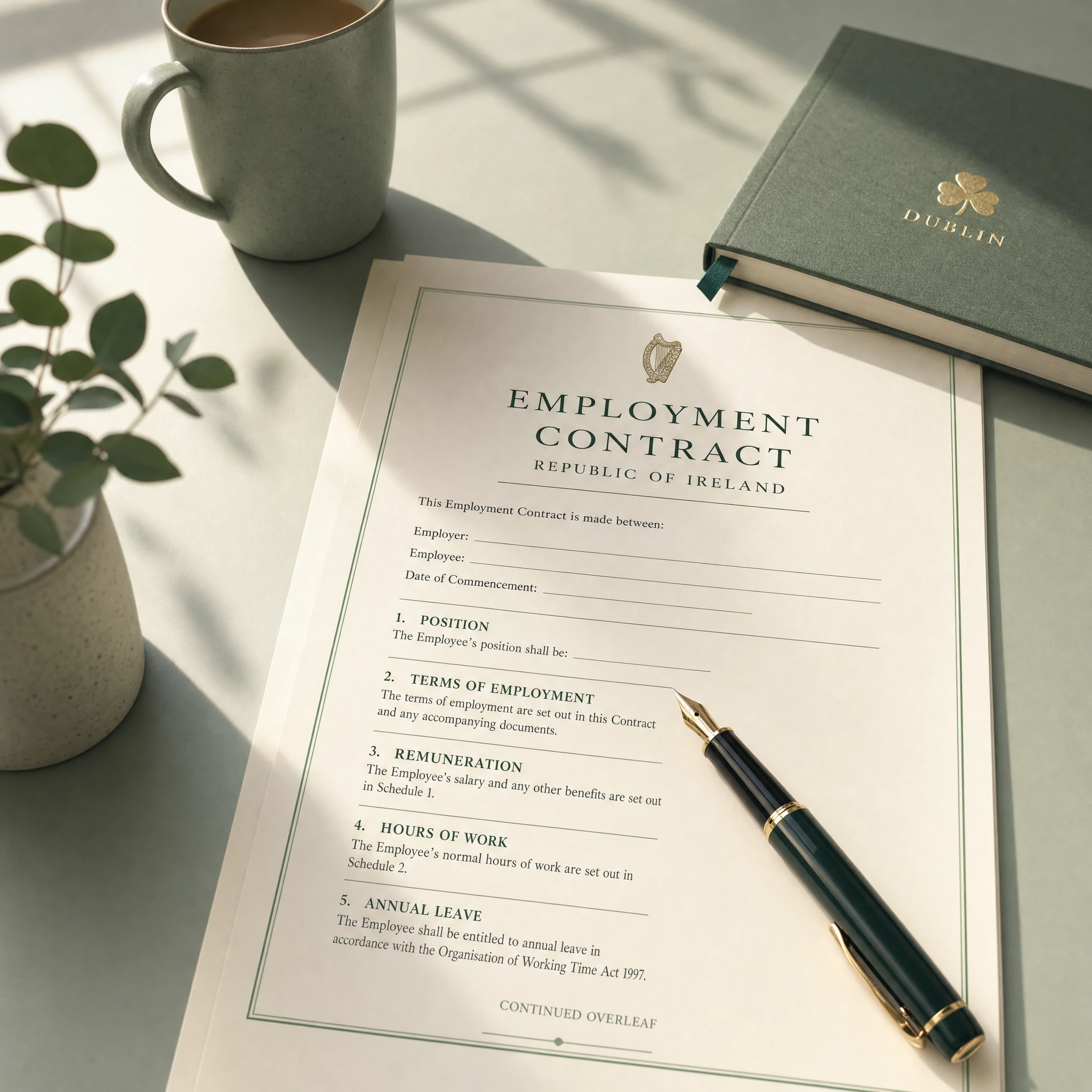
The right to request remote working in Ireland is set out in Part 3 of the Work Life Balance and Miscellaneous Provisions Act 2023, and gives every employee a statutory right to apply for a remote working arrangement, but not an automatic right to work remotely. The distinction matters. The law gives you, as employer, a structured process to consider the request, and the employee a narrow route to complain if you do not follow it.
Eligibility is broad. Employees can request remote working from day one of employment, but they must have six months of continuous service before any approved arrangement can start. A request can cover the full role, part of the role, or a specific pattern (for example three days a week from home). The legislation is accompanied by the WRC Code of Practice for Employers and Employees on the Right to Request Flexible Working and the Right to Request Remote Working, which WRC adjudication officers apply when reviewing complaints.
How should an employee make a valid request?
A valid remote working request in Ireland must be in writing, signed, submitted at least eight weeks before the proposed start date, and must specify the arrangement and the reasons for the request. Section 20 of the 2023 Act sets out the minimum content, and requests that fall short can be treated as invalid, subject to you giving the employee a chance to correct them.
In practice, a compliant request includes:
- The proposed start date and, where relevant, the end date.
- The days, hours and location of remote working.
- A brief rationale, with reference to the WRC Code of Practice.
- Confirmation that the employee has six months of continuous service, or will have by the proposed start date.
Employees can make one remote working request every twelve months, unless they change role. That limit gives both sides breathing space and prevents a single role being reopened repeatedly.
What is the employer's process and timeline?
The employer must consider the request under the WRC Code of Practice and respond in writing within four weeks, with an extension of up to eight further weeks available where more time is genuinely needed. The response must either approve, refuse or propose an alternative, with reasons.
Run the process in a clear sequence as follows:
- Acknowledge the request in writing and note the four-week deadline.
- Assess the role against the Code's suitability factors: nature of the work, data security, supervision, business continuity and the employee's home setup.
- Meet the employee to discuss the request and any proposed adjustments.
- If approving, issue a written agreement covering duration, review points, equipment, expenses and performance expectations.
- If refusing, issue a written refusal setting out the business grounds and the appeal route.
In our experience, running a parallel grievance procedure for small Irish employers is sensible if you expect internal appeals, because it keeps the remote working process clean and the grievance process documented.
On what grounds can an employer refuse?
An employer can refuse a remote working request on genuine business grounds, and the Code of Practice lists factors such as the suitability of the role, the nature of the work, data protection, supervision, health and safety, and the effect on other employees. The refusal must be reasoned, proportionate and consistent with how similar requests have been handled.
Refusals that routinely cause problems at the WRC include:
- Blanket policies that refuse all remote requests without role-by-role assessment.
- Refusals based on a preference for in-office culture rather than a specific operational need.
- Inconsistent treatment: two similar roles, two different outcomes, with no written reasoning.
- Refusals that do not engage with the employee's specific proposal.
Please note: The WRC can only consider the process, not the merits, of a refusal. In practice, that still gives employees a real route to challenge a poorly documented or inconsistent decision, and awards in the first wave of cases have focused on procedural failures rather than the substantive decision.
What belongs in a remote working policy?
A compliant remote working policy sets out who can apply, how they apply, how requests are assessed, and the terms of any approved arrangement. A standalone policy is far easier to defend than ad hoc decisions, and aligns the business with the Code of Practice.
Cover, at a minimum the following:
- Eligible roles and roles that are excluded, with reasons.
- The request form and timeline, mirroring the statutory process.
- Equipment, expenses, ergonomics and insurance.
- Data protection, including reference to your data processing agreement with any processors handling personal data on employees' home devices.
- A data map that identifies each data processor involved in the home-working setup, so your GDPR compliance position is documented.
- Information security, including any confidentiality agreement the employee has already signed.
- Performance expectations, availability windows and the right to disconnect.
- Review points and the process for ending a remote arrangement.
Review your remote working setup before the next claim tests it
Open Forest can review your remote working policy, request response templates and data protection setup against the current WRC Code of Practice, so a 2026 refusal does not become a 2026 WRC complaint.
Book a remote working policy review.
How do you end or change a remote working arrangement?
An employer can end or change an approved remote working arrangement where the original business grounds have changed, where the arrangement is not working, or where the employee has breached its terms, and the process must follow the Code of Practice. A unilateral change without consultation is the single most common failure point.
Include review dates in every written agreement. If performance or business conditions change, consult the employee, give written reasons, and allow a reasonable transition period. Employees also have the right to request a return to their previous arrangement, and the employer must respond in writing. Keep every change documented in the employee file in line with your normal document retention rules for Irish companies.
Where this leaves you
The right to request remote working in Ireland is a procedural right, not a guarantee, but the procedure is the whole ball game. Employers who run a documented, consistent process usually reach a workable outcome and rarely see a complaint. Employers who treat requests as a nuisance end up explaining themselves at the WRC.
The next step is a quick self-audit. We recommend that you read your policy against the 2024 Code of Practice, check your last five requests for consistency, and make sure your refusals would read well to an adjudicator. If you would like a guided review, Open Forest can walk through your remote working framework and flag anything that will not hold up if challenged.

Laura Ryan is a practising Barrister at the Bar of Ireland. She graduated from the Honourable Society of King’s Inns in 2024, having previously qualified and practised as a Chartered Accountant in a big four accounting firm.