Directors and bookkeepers of Irish small companies who manage their own accounts or oversee outsourced bookkeeping will find this practical guide directly useful.
Readers will learn a repeatable monthly process, how to tackle common awkward transactions, and how maintaining clean bank reconciliations protects against Revenue queries and penalties.
Monthly Bank Reconciliation for Irish Small Companies
Bank reconciliations are the foundation of a company's financial accounts. Done monthly, this process catches errors, duplicates, missing receipts, and the occasional sign of fraud while they are still cheap to fix. Skipped for six months, it turns into a forensic project that costs days of director time and the trust of every external party who reads your accounts.
This guide walks through the monthly bank rec process for a small Irish company, the awkward situations you will hit along the way, and how to catch up if you are already behind.
What bank reconciliation does
A bank reconciliation matches two records:
The incoming or outgoing cash from the bank account
The cash/bank ledger balance in the books of account
This means that every line item on all of the company's bank statements, should be allocated to the company's profit and loss or balance sheet . The two should agree on every transaction and on the closing balance. When they do, you have a reasonable assurance that:
Every transaction is recorded in the books
No duplicates have crept in
The cash you think you have is the cash you actually have
The trial balance can be trusted as a basis for VAT3, CT1, and management accounts
The bank reconciliation is typically a starting point for Revenue should they raise any queries into the company's tax returns . Every lodgement needs a documented source, and every account needs its own statement available. A bank account that has not been reconciled in months is an instant red flag. Where a bank account is not reconciled correctly, it leads not only to the financial statements being incorrect, but also means the tax returns being wrong. We have seen cases where small companies without the correct reconciliation procedures in place, have ended up with penalties and interest from Revenue.
What you need before you start
Before the first rec of the month, line up:
The opening reconciled bank balance from the previous month (the bank rec report)
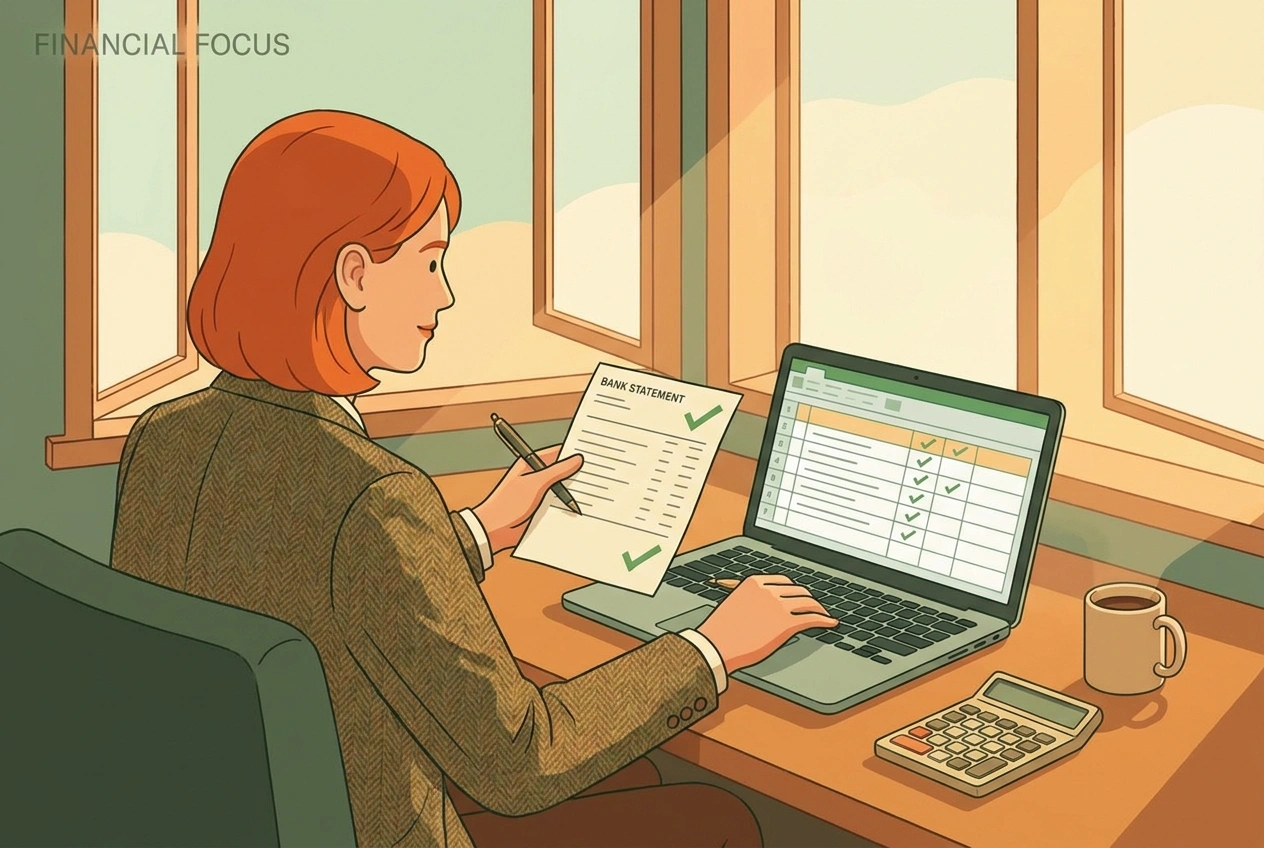
A complete bank statement or live feed for the period
All receipts and supplier invoices referenced by the period's transactions
The cut-off date for the period (usually the last day of the calendar month)
The accounting platform with the bank feed connected and refreshed
Cloud accounting tools (Xero, QuickBooks, Sage) suggest matches automatically; you confirm or reclassify each one. The work scales with transaction volume, not account complexity. Each of these software, have very useful training and tutorials which show exactly how the reconciliation process works.
The step-by-step process
A clean rec follows the same six steps every month:
Refresh the feed. Pull or sync the bank transactions for the period. Confirm the opening balance matches last month's closing.Match the obvious. Tap through automatic matches first: customer payments against issued invoices, supplier payments against bills, payroll runs against the payroll journal.Code the unmatched. Every remaining transaction must be categorised against an account in the chart of accounts . Use bank rules for repeating items (rent, software subscriptions).Investigate timing differences. A transaction that appears on the statement but not the books usually means a missing receipt. A transaction on the books but not the statement usually means a payment that has not yet cleared. Both should resolve within a few days.Run the reconciliation report. Each platform usually produces a one-page report tying the bank balance to the book balance. The report should show no unreconciled items.Lock the period. Once reconciled, lock the period in the software so historical entries cannot be changed. This protects the integrity of your double-entry bookkeeping and the audit trail. We have seen where, changes made to a period which has already been finalised, create a web of inaccuracies which ultimately the accountant has to reverse out one by one. This is a situation everyone wants to avoid.
Handling the awkward stuff
Real businesses generate transactions that resist easy matching:
Personal spending on a business card. Code to the director's loan account , not to drawings or expenses. Reimburse at month-end.Stripe and GoCardless settlements. A single bank lodgement covers many invoices, less the processor's fee. Use a clearing account and a single reconciling journal each settlement.Refunds and chargebacks. Reverse the original invoice or expense, not a new one. Match the bank entry to the original transaction's reversal.Foreign currency. Record the transaction in the company's functional currency at the day's rate. Revalue open balances monthly. Differences hit an FX gain/loss account.Bounced payments and returns. Reverse the original receipt, raise a separate fee entry for any bank charge, and chase the customer.CRO and Revenue refunds. Code against the original liability account. A surprise refund usually indicates an earlier overpayment that should also have been spotted.
Reconciling multiple accounts
Most Irish small companies have more than one cash account by year two. Each one needs its own rec:
Business current account (operating cash)
Deposit or savings account (reserves)
Credit card (treated exactly like a bank account)
Foreign currency accounts (one rec per currency)
Stripe, PayPal, Wise, and Revolut Business (each a separate ledger)
Director's loan accounts (one per director)
Director's loan accounts are not bank accounts but they reconcile the same way: prove the closing balance against an external source (the director's confirmation) every month.
Building the monthly routine
Make the rec habitual:
Pick a fixed working day each month
Time-box it to ninety minutes for a small business
Aim for "no unmatched items" as the finished state
Escalate anything that does not reconcile within a day to the accountant or bookkeeper
Save the reconciliation report into your records system in line with document retention rules
The routine compounds. By month three the platform's bank rules cover most transactions automatically and the rec takes less than an hour.
What to do when things go wrong
A few scenarios will eventually come up:
Bank feed broken or duplicating. Refresh the connection. If it is still wrong, switch to manual statement import for the period and reconnect for the next.Statement balance does not match. Almost always a missing or duplicated transaction. Bisect the period until the discrepancy disappears.Months of backlog. Reconcile oldest month first. Do not jump to the current period; later transactions reference earlier ones. Budget a full day per month of backlog.Suspicious transactions. Investigate immediately. Even a small unexplained charge can be the first sign of fraud or a compromised account.
If the backlog is more than three months, consider bringing in a bookkeeper for the catch-up and keeping the monthly routine in-house from that point.
How bank rec ties to the wider picture
Bank reconciliation is the foundation of every other report:
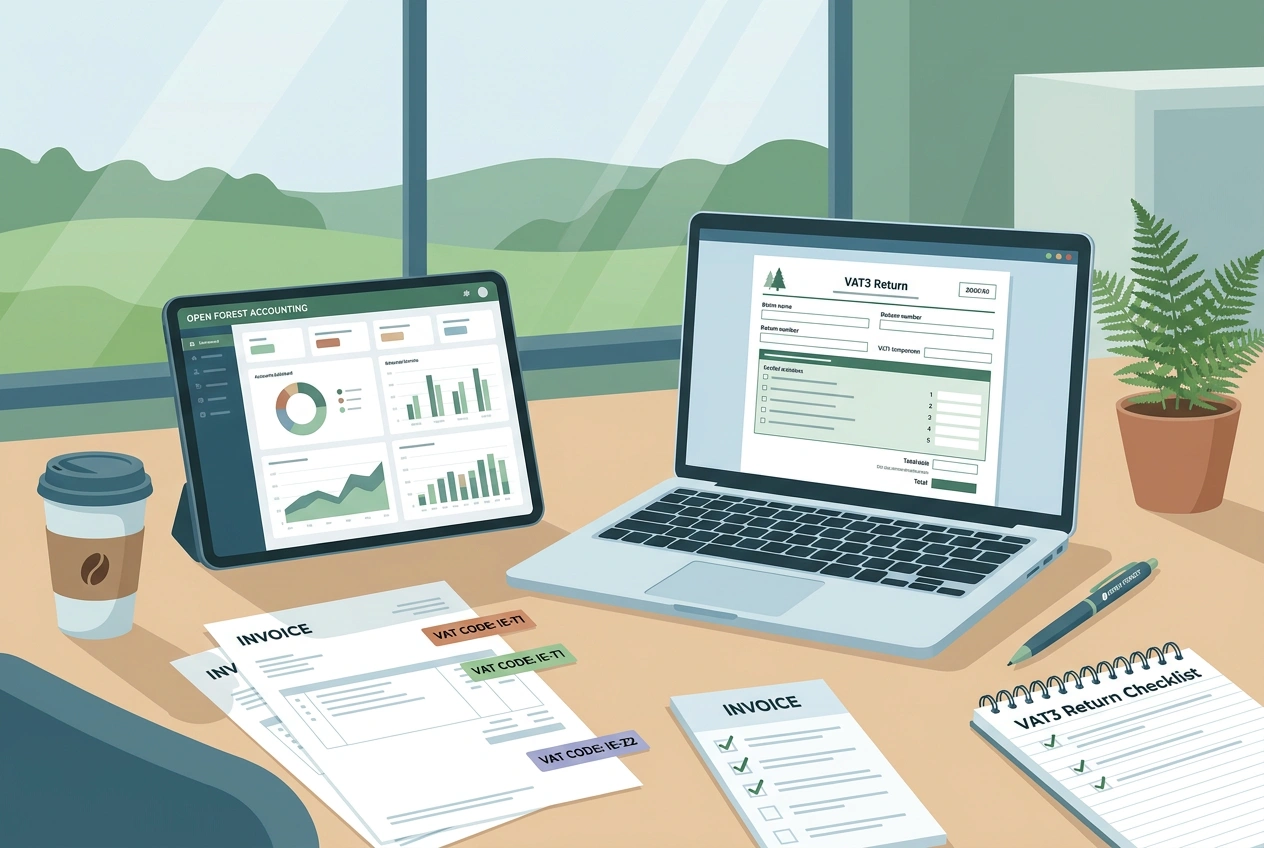
VAT3. The VAT control account ties out only when the underlying receipts and payments are reconciled. Read the VAT essentials guide for the bigger picture.Management accounts. Cash position and runway depend on accurate bank balances.Year-end financial statements.Where the company is subject to audit,t heCRO filings. Filing your annual return and the financial statements that accompany it relies on a reconciled bank position; common slips and fixes are covered in our CRO filing errors guide .
What to do next
Pick a fixed day this month and reconcile every bank account from the start of the year. If you cannot, reconcile back as far as your accounting platform allows and book a clean-up session for the rest. Either way, do not let next month's bank statement land without a reconciliation routine waiting for it.
Open Forest can run the monthly bank reconciliation for your Irish company, build the bank rules that make it sustainable, and catch you up if you are behind.