Recording Business Expenses Ireland: SME Guide
Recording business expenses Ireland is not just about keeping receipts. It is about proving what the company spent, why it spent it, how the cost was treated in the books and whether the record can stand up to review later.
For Irish SMEs, a weak expense process usually starts small. A founder pays for software on a personal card. A receipt stays in an inbox. A transaction is posted to "miscellaneous". By year end, the company has costs in the bank feed but not enough evidence behind them. We have seen companies with three years of software subscriptions sitting on the founder's personal Revolut with no record in the statutory accounts .
What does recording an expense actually mean?
Recording an expense means linking the transaction, the supporting document and the accounting category.
The transaction shows that money moved. The receipt or invoice explains what was bought. The category shows how the cost is treated in the accounts. You need all three for a clean bookkeeping record.
A good expense workflow looks like this:
The cost is paid or incurred
The receipt or invoice is captured
The document is matched to the bank or card transaction
The cost is coded to the correct account
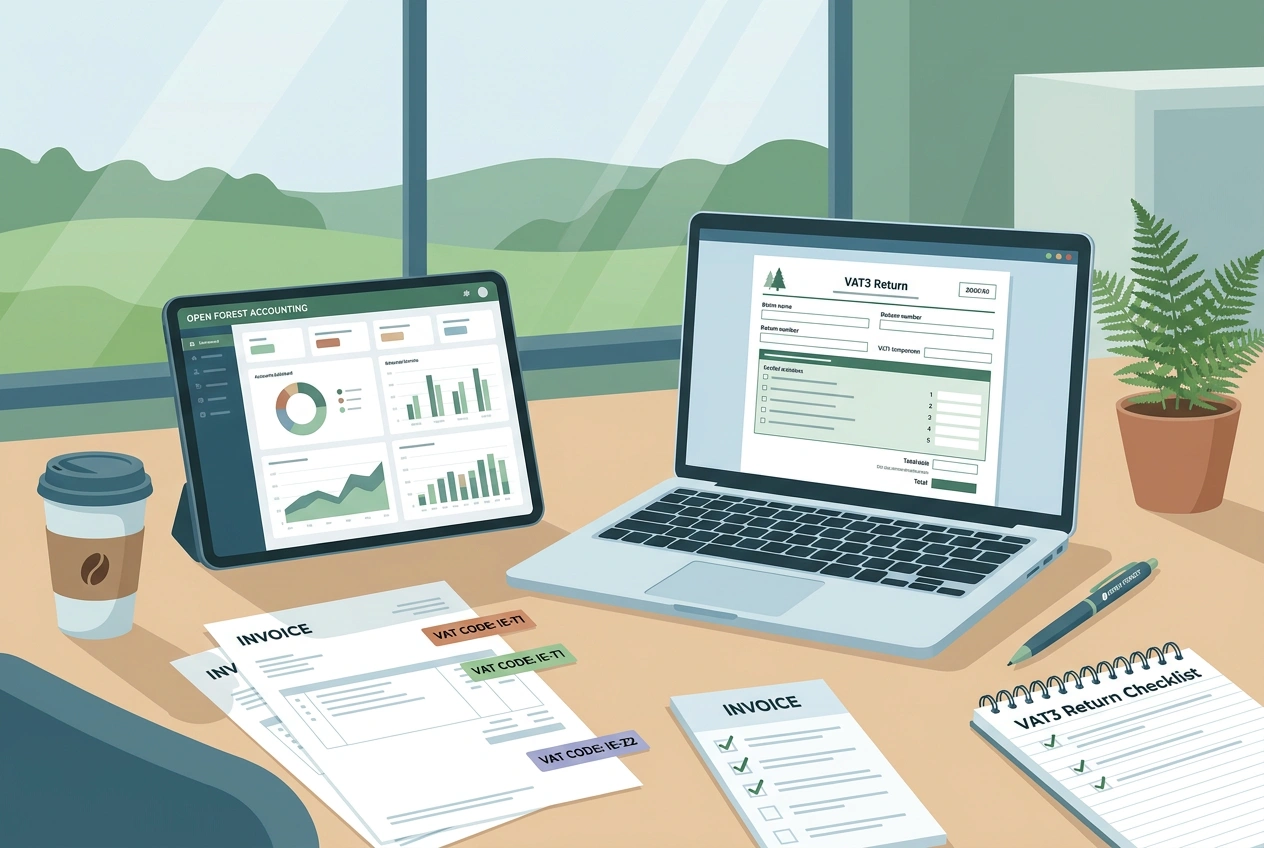
VAT treatment is reviewed where relevant
The record is stored for future inspection
This is why an invoice matters. It is not just a payment request. It is also one of the core records that supports your accounting and tax position.
What counts as a business expense?
A business tax deduction should be incurred for the purposes of the trade, with any personal element identified and excluded or apportioned.
In practice, Irish companies should ask whether the cost is genuinely connected to earning business income. Some costs are straightforward, such as accounting software, office rent or professional fees. Others need more judgement, such as travel, meals, phones, laptops or home office costs.
The main issues founders should watch are:
Mixed-use costs, where there is business and personal use
Capital items, such as equipment that may need to be treated as an fixed assets
Entertainment, which can have tax restrictions
Director-paid costs, which may affect the director's loan account
Missing documents, which make otherwise valid costs harder to support
Please note: A cost can feel business-related without being fully deductible. If there is a personal element, document the basis for any split rather than putting the full amount through the company by default.
For equipment and larger assets, the accounting treatment may involve capital allowances rather than an immediate expense deduction.
How should receipts be captured?
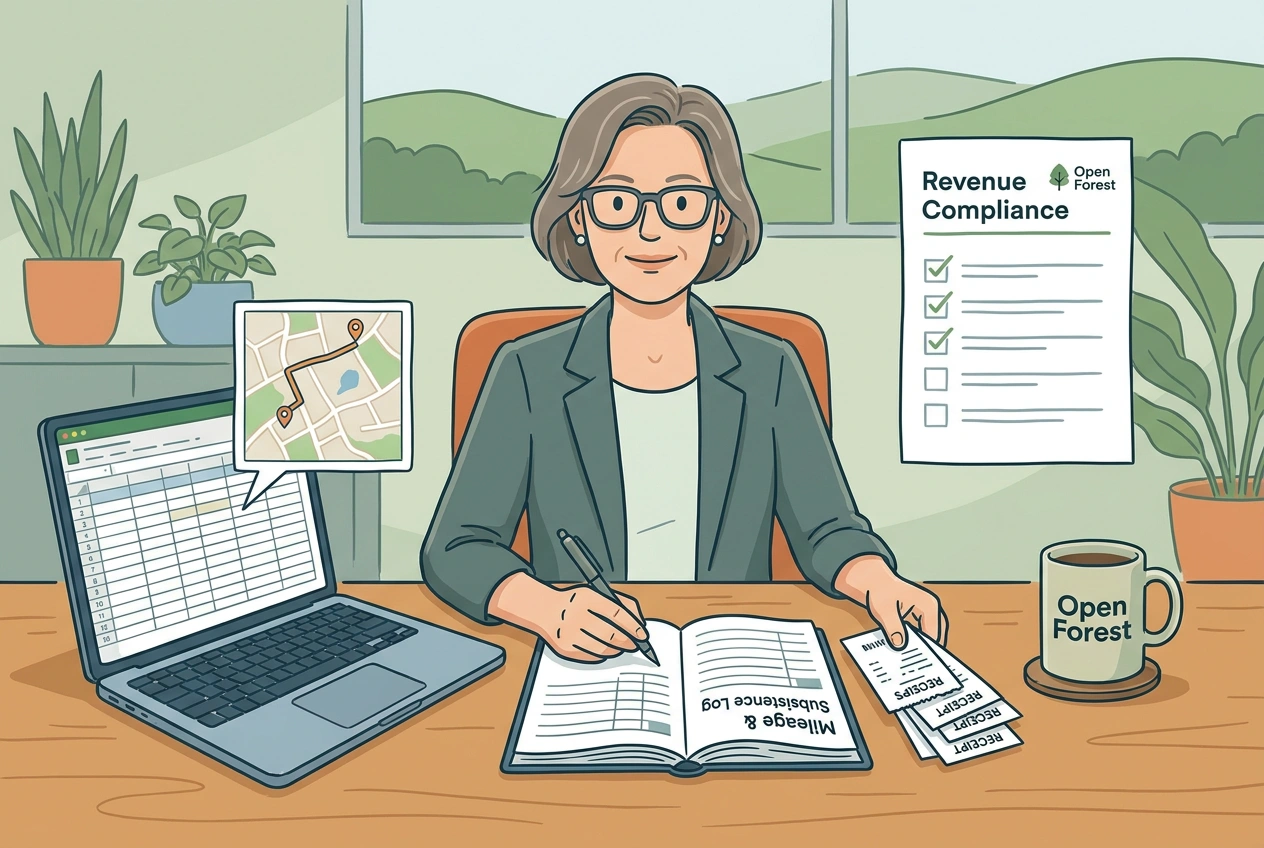
Receipts should be captured as close to the transaction date as possible and stored in a way that can be searched later.
Revenue guidance says businesses must keep records used to calculate tax, including receipts for expenses, receipts for purchases, sales invoices, nominal ledgers and accounting books. Digital records are acceptable where they are complete, readable and accessible.
You can use paper files, scanned PDFs, email folders, phone photos or tools such as Dext, Hubdoc or software-native receipt capture. The format matters less than the discipline.
A useful naming convention is:
Date
Supplier
Amount
Category or project
This sounds excessive until January comes around and you are staring at forty-seven screenshots named IMG\_3847.jpg
If a receipt is genuinely lost, keep a note explaining the supplier, amount, date, business purpose and why the original is missing. Look for the supplier to re-issue the receipt where possible. Repeated missing receipts are a bookkeeping control issue.
How should expenses be categorised?
Expenses should be categorised according to the chart of accounts and reviewed for consistency each month.
The category you choose affects management reports, annual accounts and tax review. If the same cost moves between categories each month, the accounts become harder to read.
Common distinctions include:
Travel versus subsistence
Software versus subscriptions
Repairs versus equipment
Professional fees versus consultancy
Staff welfare versus entertainment
Office costs versus home office costs
A clean purchase ledger helps because supplier costs are recorded consistently and can be reviewed by category, supplier and period.
Author's tip: Create a short coding guide for common suppliers. If Stripe, Google Workspace, Revenue, accountants and insurance providers appear every month, decide the correct category once and apply it consistently. Bookkeeping softwares allow for regularly incurred expenses to be matched automatically. If using this tool, just ensure it is review each expense allocated.
This is also where internal controls become practical. A second review of uncategorised or high-value expenses can catch errors before they reach the annual accounts.
How should personal-card and director-paid expenses be handled?
Director-paid expenses should be recorded through a clear reimbursement or director's loan account process.
Founders often pay early company costs personally, especially before the company has a bank card. That is manageable if the records are clean. It becomes messy when personal and company spending are mixed without a monthly claim process.
A director-paid expense should show:
The business purpose
The receipt or invoice
The amount paid personally
Whether the company reimbursed the director
Whether the amount was credited to the director's loan account
Avoid using the company account for personal spending and then trying to reverse it later. That creates unnecessary noise in the books and can confuse the director's loan account.
A simple internal expenses policy should state what can be claimed, what evidence is needed, who approves claims and when reimbursements are paid.
How long should expense records be retained?
Irish companies should keep accounting records for at least six years after the end of the relevant financial year.
Section 285 of the Companies Act 2014 requires accounting records to be preserved for at least six years. Revenue record-keeping requirements overlap with this, because businesses must keep the records used to calculate tax.
The practical rule is straightforward: keep the receipt, invoice, claim, approval and ledger entry together for at least six years. Some records may be worth keeping for longer, especially where they relate to assets, contracts, employment or unresolved tax matters.
Our guide to document retention rules for Irish companies explains the broader retention position.
Digital-only storage can work, but only if records are complete, backed up and accessible. A folder full of unlabelled screenshots is not a good system.
Need a cleaner expense process?
What monthly routine keeps expenses under control?
A monthly expense routine should capture documents, code transactions, reconcile accounts and clear exceptions.
Do not leave expense bookkeeping until year end. A small monthly routine is faster and more accurate than reconstructing the year from memory.
A practical monthly checklist is:
Upload all receipts and invoices
Match documents to bank and card transactions
Code each cost to the correct category
Review uncategorised or miscellaneous items
Reconcile company credit cards
Process director expense claims
Check VAT treatment where relevant
File any missing-document notes
This routine supports better annual accounts because the accountant is not forced to repair the expense record after the fact. Every company I have worked with that left expense bookkeeping to year end spent at least double the time reconstructing records and still ended up with gaps the accountant had to query.
What to do next
Good expense bookkeeping gives the company a clear audit trail from receipt to ledger.
Set the rules, capture documents early, code consistently and review exceptions monthly. Open Forest can help you clean up historic expenses and put a practical expense policy in place so your records support stronger tax compliance .