Business owners, SaaS providers, and entrepreneurs in Ireland or the EU selling products or services to consumers should read this. If operating without formal terms, you're exposed to liability, disputes, and non-compliance risks with consumer laws.
This guide teaches essential clauses like pricing, IP, data protection, and termination to draft compliant terms, prevent misunderstandings, ensure GDPR adherence, and protect revenue effectively.
Key Takeaways
- Customer terms of service provide contractual foundation, defining expectations and obligations while protecting from liability unlike B2B agreements.
- Written terms prevent risks, ensure EU/Irish consumer law compliance, and reduce disputes on pricing, delivery, refunds.
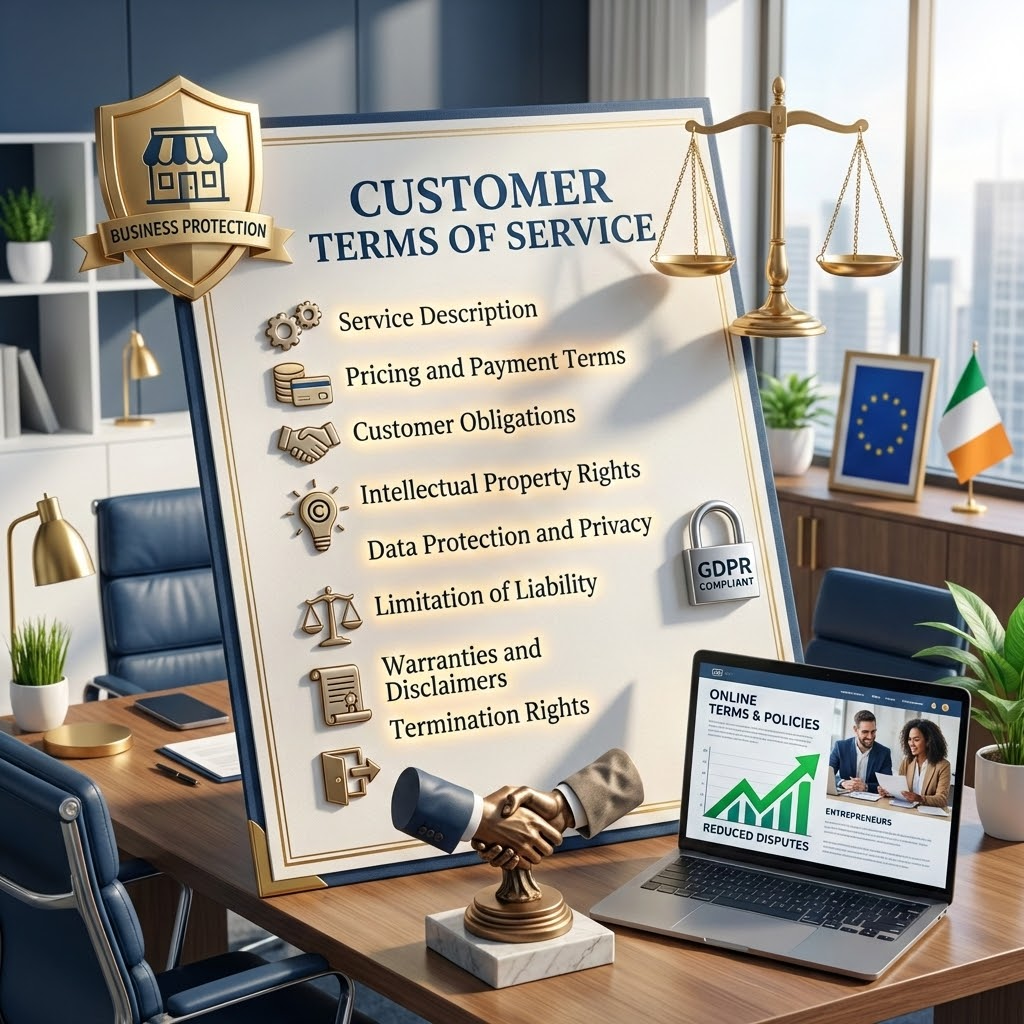
- Essential clauses cover service description, pricing, customer obligations, IP rights, GDPR data protection, liability limits, warranties, termination.
- Consumer laws mandate 14-day cooling-off, clear info; cannot be waived, or clauses unenforceable.
- Clear data ownership, processing, security, and termination provisions safeguard business and customer rights.

What Are Customer Terms of Service?
Customer terms of service create the contractual foundation for your business relationships with customers. These terms define what customers can expect from your products or services and what obligations they accept.
Unlike consultancy agreements governing B2B relationships, customer terms address consumer protection requirements and mass-market transactions. Well-drafted terms protect your business from liability while ensuring customers understand their rights and responsibilities.
Why Do You Need Written Terms of Service?
Operating without written terms exposes your business to significant commercial and legal risks. Courts interpret ambiguous relationships against the party who drafted them—usually your company.
Written terms establish defences against customer claims about product quality, delivery timing, or service limitations.
Without documented terms, customers can argue they were promised things you never intended to provide. This creates liability exposure far exceeding what reasonable terms would establish.
Consumer Law Compliance
Irish and EU consumer protection laws impose mandatory requirements that your terms must address.
Distance selling regulations, cooling-off periods, and warranty obligations apply regardless of your preferences.
Documented terms demonstrate compliance and help customers understand their statutory rights.
Dispute Prevention
Clear terms prevent misunderstandings about pricing, delivery, refunds, and customer obligations.
When expectations are documented, both parties reference the agreement rather than arguing about verbal promises.
This reduces support costs and focuses energy on serving customers rather than managing disputes.
What Are the Essential Clauses for Terms of Service?
Every customer terms of service document should address specific elements creating legal clarity. Missing provisions create gaps leading to disputes and potential liability.
Service Description
Define precisely what products or services your company provides to customers.
Essential description elements:
Vague descriptions like "marketing platform" or "business software" create disputes about included features. Detailed specifications establish clear boundaries preventing scope creep and unrealistic expectations.
Pricing and Payment Terms
Specify exactly how customers will be charged for products or services.
Critical payment provisions:
European Union Consumer Rights Directive requires clear pricing information before customers commit to purchases.
Customer Obligations
Define what customers must do or refrain from doing when using your services.
Standard customer obligations:
These obligations create grounds for termination when customers engage in problematic behaviour.
Intellectual Property Rights
Clarify ownership of platform content, customer data, and materials created during service provision.
IP provisions should address:
Without clear IP provisions, disputes arise about who owns what when relationships end.
Data Protection and Privacy
GDPR compliance requires transparency about how you collect, process, and protect customer data. Your terms should reference a separate privacy policy but include key commitments.
Essential data protection terms:
These provisions demonstrate GDPR compliance and establish customer expectations about data handling.
Limitation of Liability
Limit your company's liability for losses arising from service provision or interruptions.
Standard liability limitations:
Irish law prohibits excluding liability for death, personal injury, or fraud. Consumer contracts cannot exclude liability for statutory consumer rights. Business-to-business terms allow broader limitations if reasonable.
Warranties and Disclaimers
Define what guarantees you provide and explicitly disclaim implied warranties where legally permitted. These provisions may include services provided with reasonable skill and care and substantial conformity with documented specifications.
Consumer contracts cannot disclaim statutory warranty rights under Sale of Goods and Supply of Services Act 1980. These rights exist regardless of your disclaimers.
Termination Rights
Establish when and how either party can end the customer relationship. This includes the notice required for termination without cause and the refund policy for pre-paid but unused services. Provisions may include immediate termination rights for a material breach.
Clear termination terms allow you to exit problematic relationships while protecting completed revenue.
How Do Consumer Protection Laws Affect Your Terms?
Irish and EU consumer protection laws impose mandatory requirements overriding contrary contractual terms. Understanding these protections helps you draft compliant terms avoiding unenforceable provisions.
The Consumer Rights Directive establishes rights for purchases made online or without face-to-face contact.
Mandatory distance selling provisions:
These rights cannot be waived by your terms of service. Attempting to exclude them makes the entire clause unenforceable.
How Should You Handle Customer Data?
Customer data handling requires GDPR compliance and transparency about processing activities. Your terms should address data ownership, usage rights, and protection measures.
Data Ownership
Clarify that customers retain ownership of data they upload or create using your services. You receive only limited licenses necessary to provide services.
Data ownership provisions:
This distinction matters when customers want to export data or switch providers.
Processing Purposes
Specify exactly how you'll use customer data and your legal basis under GDPR.
Common processing purposes:
Processing beyond these stated purposes requires additional consent or legal justification.
Data Security
Describe the security measures taken to protect customer information from unauthorised access or loss.
Standard security commitments:
GDPR requires "appropriate technical and organisational measures" proportionate to processing risks.
What Termination Provisions Protect Your Business?
Termination clauses allow you to end relationships with problematic customers while protecting revenue.
Clear provisions prevent disputes about outstanding payments and data handling. Ensure that you define breaches that justify immediate termination without refund obligations. Common termination triggers may be for the non-payment of fees after reasonable notice or a violation of acceptable use policies.
Immediate termination should require written notice specifying the breach.
Termination for Convenience
Allow either party to terminate without cause subject to notice requirements.
Convenience termination provisions require a notice period (typically 30 days for monthly subscriptions) and an effective date of termination (end of current billing period). The provisions also require a refund policy for pre-paid unused services.
This flexibility allows customers to leave while protecting your completed revenue.

Stuart Connolly is a corporate barrister in Ireland and the UK since 2012.
He spent over a decade at Ireland's top law firms including Arthur Cox & William Fry.


.webp)