Startup founders, entrepreneurs managing equity, and investors evaluating companies during fundraising.
They'll learn to construct accurate cap tables, track fully diluted ownership, avoid due diligence pitfalls, and implement maintenance best practices for smooth investments and exits.
Key Takeaways
- A cap table records current share ownership and potential from options and convertibles for fully diluted view.
- Critical for investors in due diligence to assess ownership before investing.
- Must match official records like register of members and registry filings.
- Errors like missing issuances or wrong calculations delay fundraising and exits.
- Maintain as live document: update every equity event and reconcile regularly.

A cap table, short for capitalisation table, is a record of who owns shares in a company. It shows the ownership structure of the business and how that ownership changes over time.
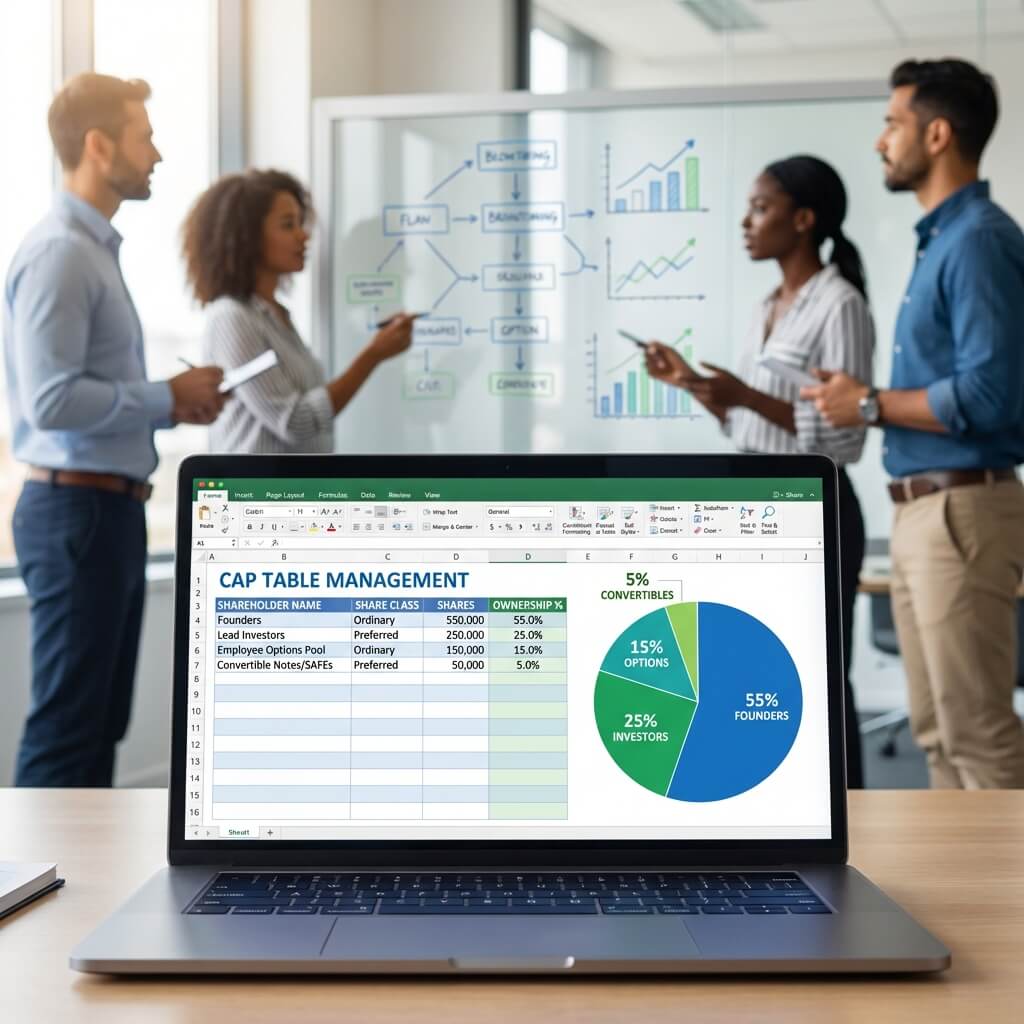
A cap table tracks every shareholder, the number of shares they hold, and what percentage of the company those shares represent. It also records potential ownership from options and convertible instruments, such as convertible loan notes and SAFEs.
This sounds technical, but here is what it means. A cap table answers one critical question for founders and investors. Who owns what in the company?
Below, we explain what a cap table tracks, what information it should include, and why accuracy matters during fundraising and company exits.
What is a cap table?
A cap table is a structured record that shows the ownership of a company.
It lists each shareholder and the shares they hold. From this, the company can calculate the percentage ownership of each person or investor.
A typical cap table includes information such as:
- The name of each stakeholder
- The number of shares (or securities convertible into shares ) they hold
- The class of shares they hold
- The percentage of the company they own
Cap tables are usually maintained in a spreadsheet or specialist software. As the company grows, the cap table becomes more detailed because it must track multiple investment rounds and new share issuances.
In practice, this means the cap table becomes the central reference point for understanding the company’s ownership structure.
What should a cap table include?
A good cap table records more than just issued shares. It must also track future ownership rights that may convert into shares later (i.e convertible loan notes and SAFEs).
This is important because investors want to understand the fully diluted ownership of the company. Fully diluted means the ownership structure if all rights to shares were exercised.
A typical cap table should include the following.
Shares
Shares are the actual ownership units in a company.
The cap table should show:
Options
An option is the right to buy shares in the future, usually granted to employees or advisers.
Options are often issued through an employee share option plan. Even though the shares have not yet been issued, they must appear in the cap table because they represent potential future ownership.
Convertible instruments
A convertible instrument is an investment that can convert into shares later.
Common examples include:
- Convertible loan notes
- Simple agreements for future equity (SAFE)
- Other convertible funding arrangements
These instruments do not immediately create shares, but they will likely convert during a future investment round.
In practice, this means a cap table must track both current ownership and future potential ownership.
Why does a cap table matter during fundraising?
Investors rely on the cap table to understand who owns the company and how ownership will change after their investment.
Before investing, investors usually review the cap table carefully during due diligence. Due diligence is the process of reviewing the company’s records before completing an investment.
A clear and accurate cap table helps investors answer important questions:
- Who currently owns the company
- How much equity founders hold
- How much equity is reserved for employees
- How new investment will affect ownership percentages
If the cap table is inaccurate, investors may lose confidence in the company’s records.
One of the first documents investors request during fundraising is the cap table.
Why must the cap table match company records?
The cap table must always match the company’s official company records.
These records include:
- The company’s register of members, which lists shareholders
- The register of share allotments, which records when shares were issued
- Filings made with the relevant company registry
If the cap table does not match these records, it creates problems during fundraising or exit.
For example, the cap table might show that an investor owns a certain number of shares. If the official records show something different, the discrepancy must be resolved before the transaction can proceed.
The key difference is that the cap table is an internal record, while company registers and registry filings are official records.
What mistakes often appear during due diligence?
Cap table errors are common in early stage companies. They often happen because the company grows quickly and records are not updated consistently.
During fundraising or an exit process, these mistakes usually appear during due diligence.
Common issues include:
- Shares issued but not recorded correctly in the cap table
- Option grants that were never formally documented
- Convertible instruments missing from the cap table
- Ownership percentages calculated incorrectly
- Cap table numbers not matching company registers
- Cap tables becoming difficult to determine. This can happen if a company issues convertible loan notes and / or SAFEs with different terms
These errors can take time to fix. In some cases they delay an investment or acquisition while records are corrected.
Update the cap table every time shares, options, or convertible instruments are created. For convertible securities, keep their terms consistent.
How should founders maintain a cap table?
Founders should treat the cap table as a live record of the company’s ownership.
Every time the company issues shares, grants options, or signs a convertible investment, the cap table should be updated.
Here is a practical approach many companies follow.
Step 1: Record every share capital issuance
Whenever the company issues new shares, add them to the cap table immediately.
Step 2: Update option grants
Each time options are granted to employees or advisers, record them in the option section of the cap table.
Step 3: Track convertible instruments
Convertible investments should be recorded along with their key terms, including conversion mechanics and other relevant terms.
Step 4: Reconcile with company records
Regularly compare the cap table with the company’s registers and filings with the relevant company registry.
In practice, this means the cap table should always reflect the same ownership information as the company’s official records.
Summary, a cap table is the foundation of company ownership
A cap table tracks who owns shares in a company and how ownership may change in the future.
It must record shares, options, and convertible instruments so founders and investors can understand the full ownership structure of the business.
Accuracy matters. If the cap table does not match company records or registry filings, problems can arise during fundraising or an exit.

Stuart Connolly is a corporate barrister in Ireland and the UK since 2012.
He spent over a decade at Ireland's top law firms including Arthur Cox & William Fry.


.webp)