This article is for startup founders and early employees who are facing equity dilution or about to raise investment.
If you're wondering whether giving up 20% of your company is a good deal, how option pools actually work, or why your ownership percentage keeps shrinking with each funding round, this guide explains what dilution really means, when it helps versus hurts you, and how to protect yourself during negotiations.
Key Takeaways
• Dilution is worthwhile when your smaller percentage of a larger company is worth more than your original stake. • Seed rounds typically dilute founders by 10-20%, Series A by 20-25%, with founders owning 10-30% by exit. • Create employee option pools before investment rounds so investors share the dilution cost with founders. • Liquidation preferences can give investors far more than their ownership percentage suggests in an exit scenario. • Track all convertible notes and SAFEs carefully as they create delayed dilution that won't be known until conversion.
Dilution occurs when your company issues new shares, causing your ownership percentage to decrease even though you still own the same number of shares. Think of it like owning half a pizza, if someone adds more pizza to the table, your slices now represent less than half of the total. Companies typically issue new shares to raise investment capital or grant equity to employees.
Is dilution always bad for founders?
No, dilution can actually be beneficial if it increases your company's overall value. Owning 25% of a €2 million company is worth more than owning 50% of a €500,000 company. Dilution only becomes problematic when shares are issued too cheaply or without adding real value, leaving your stake worth less than before.
How much dilution should I expect in typical funding rounds?
Seed rounds typically dilute founders by 10-20%, while Series A rounds take another 20-25%. Employee option pools usually account for 10-20% before each round. By the time you exit, founders often own just 10-30% of the company they started, but remember, 15% of €50 million beats 100% of nothing.
What's the difference between ownership dilution and economic dilution?
Ownership dilution means your percentage decreases, while economic dilution means the actual value of your shares decreases. You can experience ownership dilution without economic dilution if the company's value increases enough, for example, dropping from 50% of a €1 million company to 40% of a €3 million company means your stake's value more than doubled despite the lower percentage.
How does option pool dilution work and why does it hurt founders more?
Investors typically require 10-20% option pools to be created before they invest, and this dilution comes entirely from founders, not investors. For example, if you create a 15% pool (dropping founders to 85%) and then an investor takes 20%, founders end up with 68%, the investor gets 20%, and the pool is 12%, understanding this math prevents nasty surprises during negotiations.
What are liquidation preferences and how do they create hidden dilution?
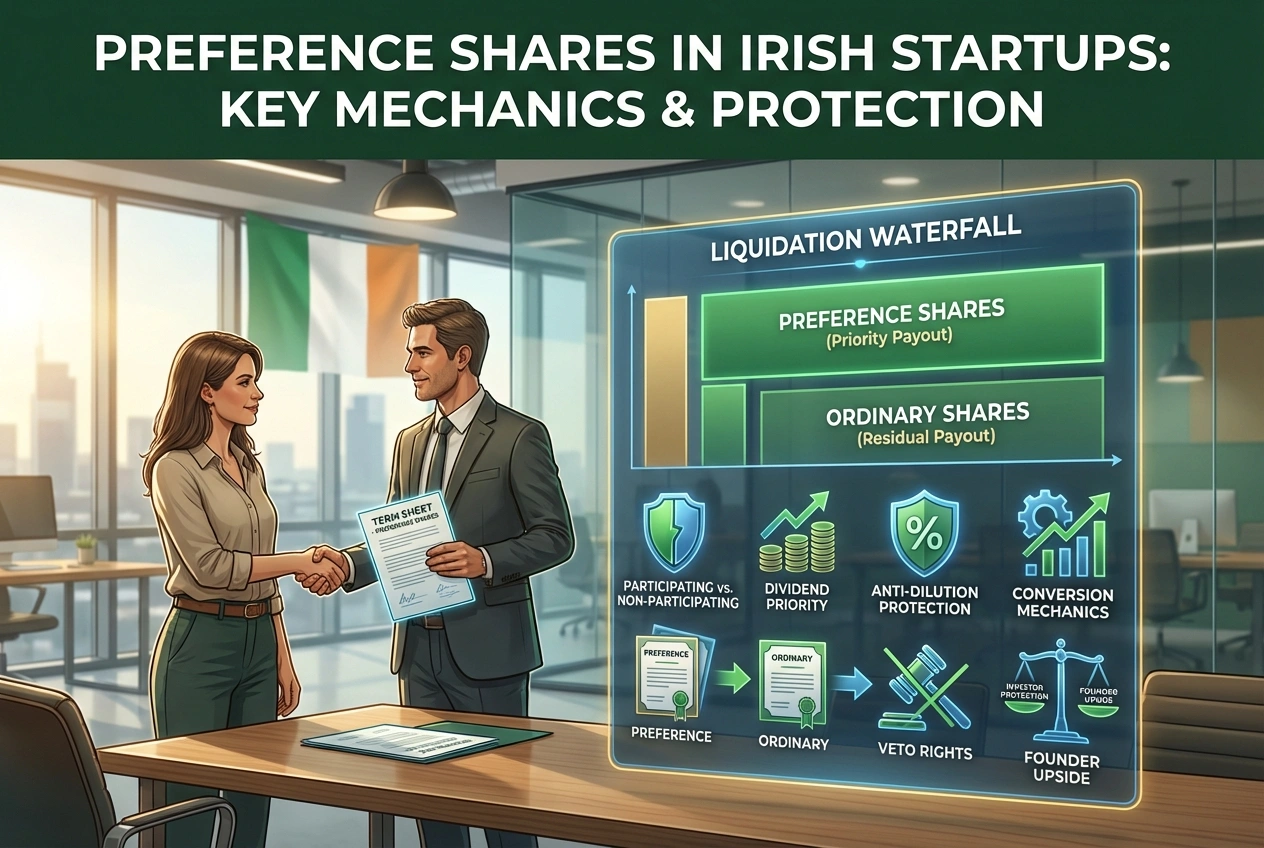
Liquidation preferences allow investors to get paid first in an exit, creating economic dilution beyond ownership percentages. For instance, an investor with €1 million invested for 20% and a 1× liquidation preference could receive €1.4 million from a €3 million exit (effectively 47%, not 20%). Always understand investor preferences, not just percentages, to know your true economic stake.
How do convertible notes and SAFEs affect dilution?
Convertible instruments create delayed dilution that you won't know exactly until they convert into shares. A €100,000 SAFE with a €2 million cap converting when the company is valued at €4 million means the SAFE investor gets twice as many shares as current investors due to the 50% discount. Track all convertibles carefully to understand your total potential dilution.
How can I protect myself from excessive dilution?
Pre-emption rights let you buy new shares to maintain your percentage, while anti-dilution provisions protect against future down rounds. Create option pools before investment so investors share the dilution, and ensure vesting schedules so people earn equity over time. Most importantly, only raise what you need when you need it and negotiate higher valuations to reduce dilution.
What's the key question I should ask about dilution?
Don't ask "am I being diluted?", ask "is this dilution worth it?" If you need €500,000 to build your product, giving 20% makes sense, but giving 40% because you're nervous should make you reconsider. Make dilution decisions based on whether they accelerate building value, not just on the percentage you're giving up.


.webp)









%20(1).webp)
