Irish startup founders preparing for seed or Series A fundraises in Ireland.
This guide helps you anticipate investor requests, fix common record gaps, organise a professional data room, and close deals in weeks rather than dragging out diligence.
Key Takeaways
Organise your data room before pitching to keep diligence short and maintain fundraising momentum.
Clean up CRO basics like annual returns, registers, and beneficial ownership filings early.
Rebuild cap table from scratch, tying every share to signed resolutions and B5 filings.
Secure complete IP chain of title with dated founder assignments and contractor agreements.
Structure data room with standard folders, consistent file names, and a change log for efficiency.
What does due diligence mean in an Irish fundraise?
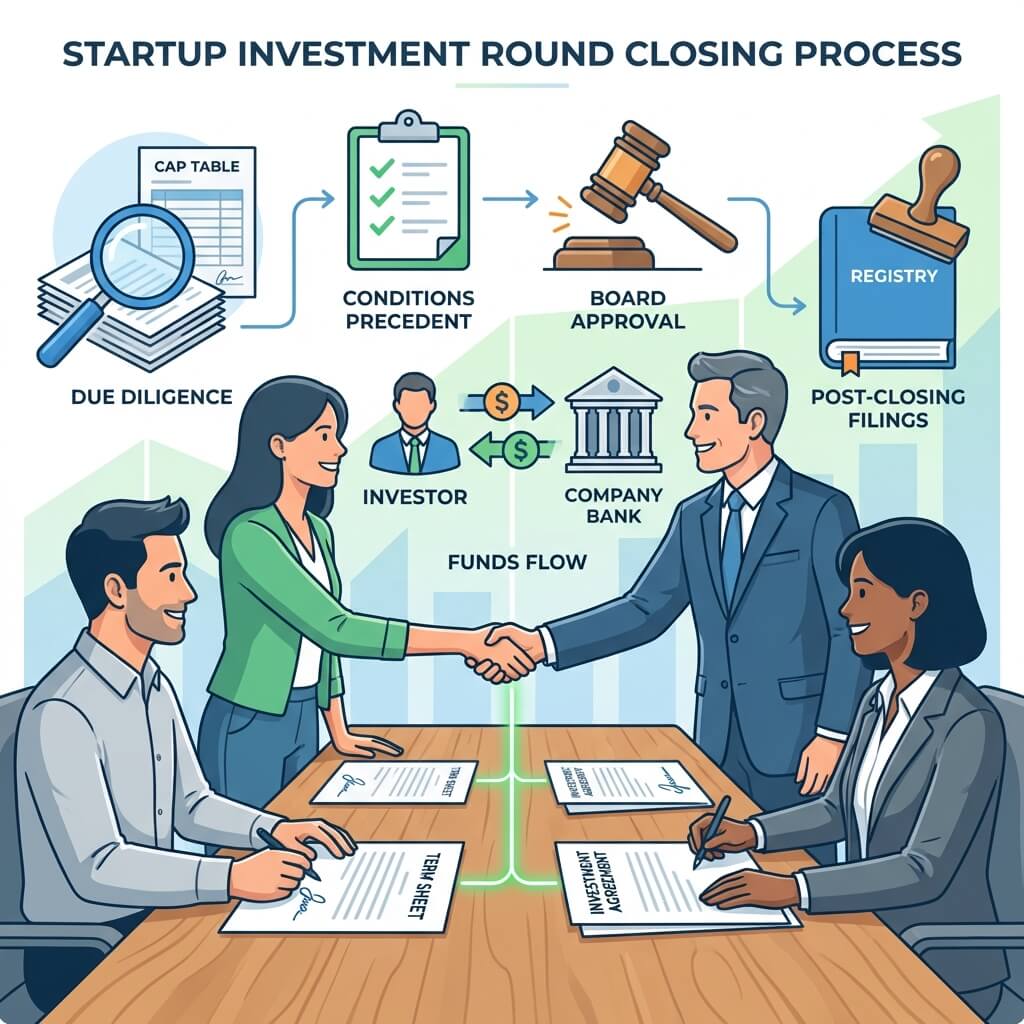
Due diligence is the investor's structured review of your company's legal, commercial, and financial records before signing binding investment documents. It starts post-term sheet, lighter at seed (document-led), deeper at Series A on contracts, cap table, and IP. Aim to complete in 4-6 weeks.
Which company and CRO basics do investors check?
Investors request recent CRO extract, current constitution, amendments, statutory registers (members, directors, secretaries, beneficial owners), up-to-date annual return, and beneficial ownership filing. Common issues include late annual returns, mismatched member registers, and unnotified director appointments.
How should the cap table be documented?
Provide a fully diluted cap table showing shares, options, convertibles; share allotment resolutions, Form B5 filings, signed subscription agreements, SAFEs, ESOP documents, and consents. Ensure it reconciles with company registers and CRO filings for quick diligence.
What IP and product ownership do investors expect?
Founder IP assignments dated pre-incorporation, contractor/employee agreements with IP clauses, register of open-source dependencies, trademark registrations, and domain records in company name. A mere statement is insufficient; need underlying agreements.
How do you build a clean data room?
Organise into 8 folders: Corporate/CRO, Cap table/equity, IP/product, Commercial contracts, Employment/contractors, Finance/tax, Data protection/compliance, Disputes/disclosures. Use consistent naming like YYYY-MM-DD\_document-type.pdf, version control, and change log.





.webp)