Down Rounds: Legal and Structural Implications for Irish Startups
A down round is when your startup raises capital at a valuation lower than the previous round. It is not the outcome any founder plans for, but it is a reality that many Irish startups face, particularly during market corrections, missed milestones, or extended runway pressure. In 2023 and 2024, down rounds became significantly more common across European venture markets as valuations reset from the highs of 2021.
The stigma around down rounds is often overstated. A down round does not mean your company is failing. It means the market, your metrics, or both have changed since your last raise. What matters is how you navigate it, because the legal, structural, and governance implications of a down round are significant, and getting them wrong can damage your cap table , your team, and your relationship with investors far more than the lower valuation itself.
What is a down round?
A down round is a financing round where the company's pre-money valuation is lower than the post-money valuation of the previous round. In simple terms, new investors are paying less per share than the previous investors paid.
Down rounds happen for several reasons:
Market conditions: A broader market downturn reduces valuations across the sector, regardless of company performanceMissed targets: Revenue, user growth, or product milestones fell short of the projections used in the previous roundRunway pressure: The company needs capital before it has achieved enough to justify a higher valuationSector correction: The industry vertical has fallen out of favour with investors
In the Irish and European context, down rounds carry less stigma than they once did. The post-2021 valuation correction has normalised lower pricing, and many strong companies have raised down rounds and recovered. The key is managing the process correctly.
A down round becomes a "cram down" or "washout" financing when the terms are so dilutive that existing shareholders, particularly founders and early employees, lose most of their economic interest. These extreme scenarios are avoidable with proper negotiation and legal structuring.
How do anti-dilution provisions trigger in a down round?
Anti-dilution protection is the most immediate legal consequence of a down round. If your previous investors hold preferred shares with anti-dilution rights, which is standard in most Irish venture deals, a down round triggers an adjustment to their conversion price, giving them more shares to compensate them for the lower valuation.
There are two main types of anti-dilution protection :
Full ratchet
Full ratchet is the most aggressive form. It adjusts the investor's conversion price to the exact price per share paid in the down round, regardless of how many new shares are issued. This means the investor is treated as if they had originally invested at the lower price.
Example: An investor who paid €2.00 per share in Series A sees a down round priced at €1.00 per share. Under full ratchet, the deemed price per share drops to €1.00, effectively doubling the number of shares they will receive. The dilution falls entirely on the founders and other ordinary shareholders.
Full ratchet is uncommon in modern Irish venture deals because of its severity, but it does appear, particularly in bridge rounds with distressed pricing.
Weighted average
Weighted average anti-dilution is the standard in most Irish and European venture financing. It adjusts the conversion price based on a formula that considers both the price and the number of shares issued in the down round. The dilution is shared more proportionately.
The formula is: CP₂ = CP₁ × (A + B) / (A + C)
Where:
CP₁ = existing conversion price
CP₂ = new conversion price
A = total shares outstanding before the down round
B = shares that would have been issued at the old price for the same money
C = shares actually issued at the new, lower price
There are two variants:
Broad-based weighted average: Includes all fully diluted share capital (common, preferred, options, warrants) in the calculation. This produces a smaller adjustment and less dilution to founders. It is the most founder-friendly standard anti-dilution provision.Narrow-based weighted average: Includes only outstanding preferred shares in the calculation. This produces a larger adjustment, more favourable to investors.
Broad-based weighted average is the market standard in Irish venture deals. If your term sheet says "weighted average anti-dilution" without specifying, confirm whether it is broad-based or narrow-based, the difference matters significantly in a down round.
For a deeper explanation of how dilution mechanics work, see our equity dilution guide .
What is the impact on existing shareholders?
Founder dilution
Founders bear the heaviest impact in a down round. New shares are issued at a lower price, anti-dilution provisions increase the number of shares received by preferred shareholders, and ordinary shareholders' percentage ownership drops In a severe down round with full ratchet anti-dilution, ordinary shareholders can lose a substantial portion, even the majority, of their economic interest.
Model the dilution before committing to the round. Use your cap table to calculate the fully diluted ownership after the new shares are issued and all anti-dilution adjustments are applied. If the numbers are unworkable, negotiate the terms before accepting them.
Employee option pool
Down rounds create a particular problem for employees. If the company's valuation drops below the exercise price of outstanding options, those options are "underwater", they are worth less than what employees would have to pay to exercise them. Underwater options lose their value as a retention and incentive tool.
The most common solution is to reprice or re-grant options at the new, lower valuation. This resets the incentive but requires board approval and may have tax implications under Irish revenue rules. Some companies cancel existing options and issue new ones from a refreshed option pool , which itself often requires shareholder approval if the pool needs to be expanded.
For guidance on share capital structure, including option pools , see our detailed guide.
Early angel investors
Angel investors who invested for ordinary shares at a higher valuation in earlier rounds face dilution just like founders. If they hold ordinary shares (common in Irish angel deals), they do not have anti-dilution protection. If they hold preferred shares, their anti-dilution provisions will determine the extent of the adjustment.
Angels who cannot or choose not to participate in the down round see their ownership percentage shrink further. This is where pay-to-play provisions become relevant.
Pay-to-play provisions
Pay-to-play provisions incentivise existing investors to participate in new rounds by penalising those who do not. Typical penalties include:
Conversion of preferred shares to common shares (losing liquidation preferences and other preferential rights)
Loss of anti-dilution protection
Loss of board seats or veto rights
Pay-to-play provisions are more common in down market conditions and have been relatively uncommon in early stage investments in the Irish market in recent years. They protect the company by ensuring that existing investors contribute to the new funding rather than free-riding on others' capital while retaining their preferential rights.
What are the board and governance dynamics?
A down round creates potential conflicts of interest at the board level, particularly when investor directors are involved in both sides of the transaction.
Board approval and conflicts
The board must approve the terms of the financing. Investor directors whose funds are leading the down round have a direct financial interest in the pricing, they benefit from a lower valuation because they get more shares for less money. This creates a conflict of interest that must be managed.
Best practice is to have independent directors or founder directors lead the negotiation of the down round terms. Conflicted directors should recuse themselves from voting on the specific terms, or at minimum disclose the conflict and have the independent members approve the transaction.
Independent valuation
In significant down rounds, particularly where existing investors are leading the round, consider obtaining an independent valuation. This provides evidence that the pricing is fair and protects the board against future claims by minority shareholders that the company was sold too cheaply.
Shareholder consent requirements
Review your shareholders' agreement carefully. Most Irish venture-stage shareholders' agreements include provisions that require shareholder consent for new share issues, particularly if they are at a lower price than previous rounds. Pre-emption rights , drag-along and tag-along provisions, and reserved matters all need to be checked.
If shareholder consent is required and some shareholders object, you may need to negotiate waivers. This is a common source of delay and friction in down rounds.
What structural alternatives exist to a down round?
Before accepting a down round, consider whether alternative structures could achieve the same objective with less dilution or fewer governance complications.
Convertible bridge financing
A convertible loan note or ASA (Advance Subscription Agreement) delays the valuation conversation. The investment converts into shares at the next priced round, typically at a discount. This gives the company runway without setting a lower valuation now.
However, bridge financing only delays the issue. If the next round is still a down round, the conversion discount compounds the dilution. And if bridge investors receive a valuation cap, that cap may effectively set a ceiling on the company's valuation for the next round.
Structured rounds with ratchets or milestones
Some down rounds include milestone-based ratchet provisions that adjust the effective price per share upward if the company hits certain targets within a defined period. This gives investors downside protection at the lower valuation while giving founders the opportunity to recover some of the dilution if performance improves.
When a clean down round is better
Sometimes a straightforward down round at a fair price is better than a complex alternative. Bridge financings with heavy discounts and caps can create more dilution than a clean equity round. Overly complicated structures can deter future investors who do not want to untangle the cap table. If the market has genuinely repriced your company, accepting that reality and raising clean equity may be the most practical path.
What are the legal steps for executing a down round?
Once the decision is made, executing a down round requires careful legal work:
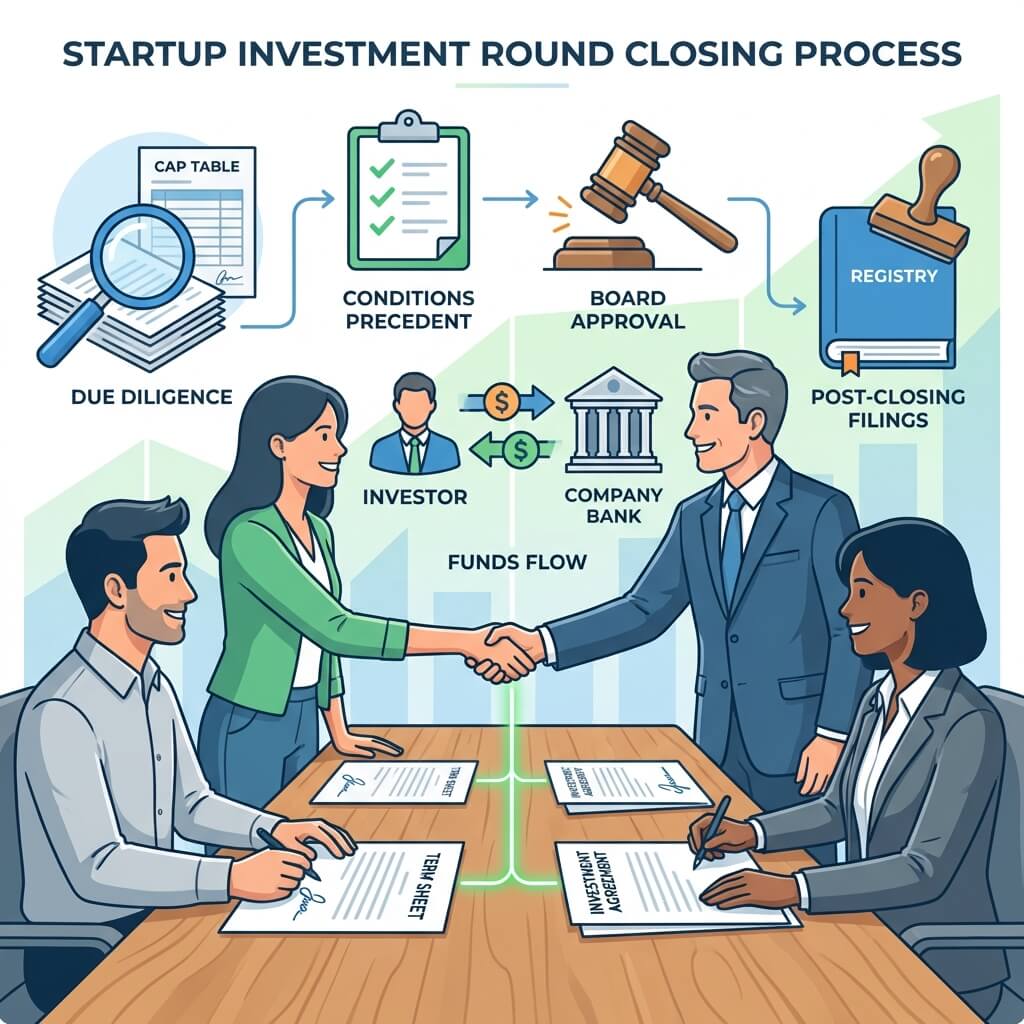
Review existing anti-dilution and pre-emption provisions. Understand exactly what adjustments will be triggered and what consents are required. Model the cap table impact before finalising terms.Negotiate waivers from affected shareholders. If anti-dilution adjustments would be particularly severe, negotiate partial or full waivers with existing investors in exchange for other concessions (additional shares, improved governance rights, etc.).Update the company's constitution if needed. If new share classes are being created or the authorised share capital needs to be increased, this requires a special resolution of the shareholders.Complete CRO filings. After the round closes, file the appropriate returns with the Companies Registration Office, Form B5 (allotment of shares ) and any amendments to the constitution.Update the shareholders' agreement. The SHA may need to be amended or replaced to reflect the new investor's rights, the updated cap table, and any changes to governance provisions.Refresh the employee option pool. If options are being repriced or a new pool is being created, this needs board approval and potentially shareholder approval. Ensure the tax treatment is reviewed with your tax advisor.
Moving forward after a down round
A down round is a reset, not an ending. The companies that recover strongest are those that:
Reset expectations transparently. Communicate honestly with your team about what the down round means and what comes next. Uncertainty is worse than bad news delivered clearly.Refresh the option pool. Give employees new options at the current valuation so they have meaningful upside. This is essential for retention, underwater options do not retain anyone.Build credibility with investors. Deliver on the milestones you set during the down round. The fastest way to rebuild confidence is consistent execution against a realistic plan.Position for recovery. A down round can actually strengthen your investor base if new investors are committed and existing investors have participated. The company has fresh capital, a realistic valuation, and aligned incentives.
Need help navigating your fundraise? Get started with Open Forest


.webp)