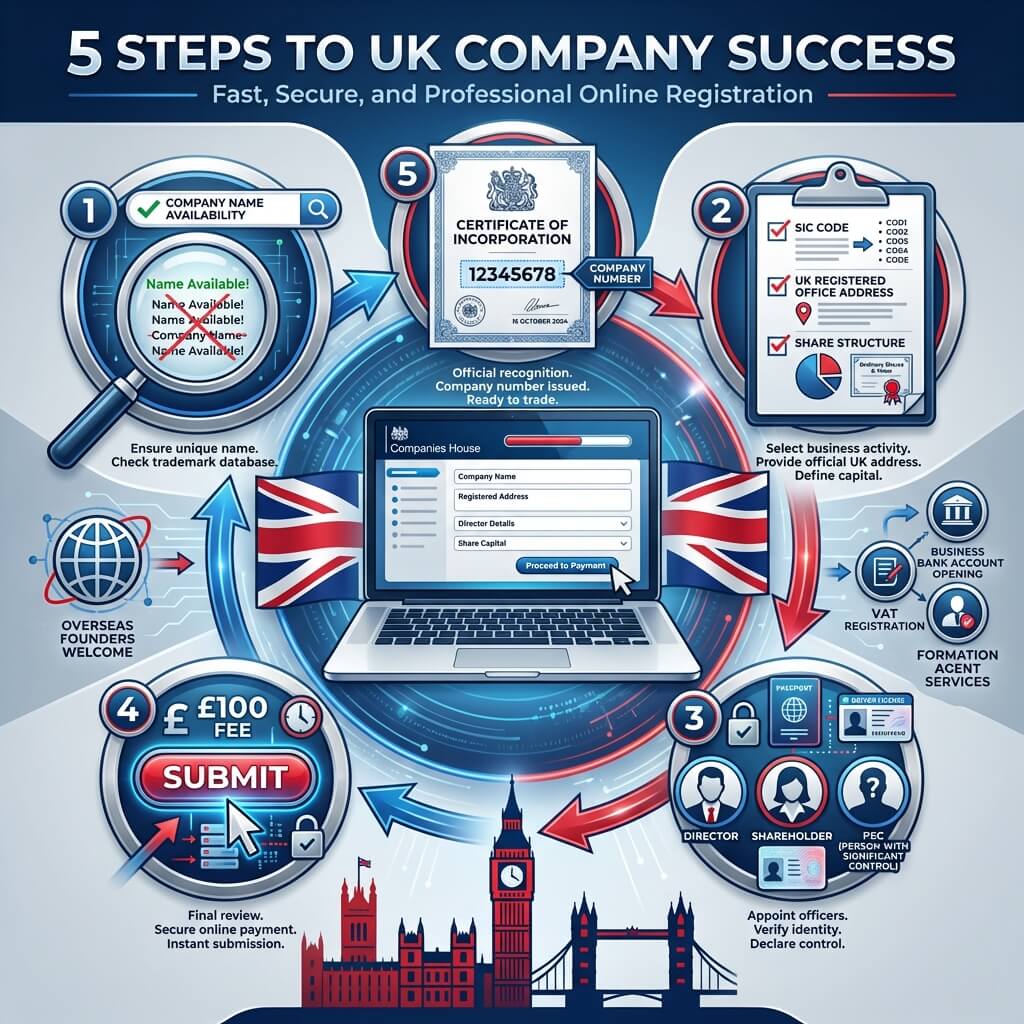
This article is aimed at aspiring entrepreneurs, property investors, and small‑business founders in Ireland who are considering launching a residential letting or short‑term rental operation and need guidance on the legal and regulatory framework.
After reading, you will understand how to choose the appropriate ownership structure (personal, LTD, SPV), navigate CRO incorporation, register with the RTB and Fáilte Ireland, meet safety and compliance standards, and manage post‑incorporation obligations such as tax filings and ongoing reporting.
Key Takeaways
- Choosing the ownership structure (personal name, limited company, or SPV) determines tax treatment, liability and ability to ring‑fence assets.
- Rental income in a company is taxed at 25% corporation tax, and undistributed profits may face a close‑company surcharge that can raise the effective rate to around 40%.
- All residential tenancies must be registered with the RTB, with fees and heavy fines or penalties for failure to register.
- Short‑term lets require registration with Fáilte Ireland (from late 2026) and may need planning permission in rent‑pressure zones.
- Let properties must comply with minimum housing standards, fire and carbon‑monoxide alarms, and hold a valid BER certificate, otherwise fines up to €5,000 apply.
Starting a Property Letting Business in Ireland - Setup Guide
Buying a property to let, or running a handful of short-term rentals, looks simple until you meet the paperwork. Starting a property letting business in Ireland means choosing an ownership structure, registering with the right regulator, and meeting standards rules that carry real penalties when you get them wrong. The rules also moved in 2025 and 2026, so a lot of older guidance is now out of date.
This guide walks the decisions in order: how to hold the property, how rental income is taxed, when you must register with the Residential Tenancies Board, the separate rules for short-term lets, the safety standards every let property must meet, and what to keep on top of once the company exists.
Should you hold the property personally or in a company?
The first decision in a property letting business is whether to own the property in your own name or through a limited company. There is no single right answer, because it depends on whether you plan to draw the rent as income now or reinvest it to build a portfolio.
If you let in your own name, the net rent is added to your other income and taxed at your marginal rate, which can reach 52 percent once income tax, USC and PRSI are counted. A company pays corporation tax instead, but you then meet a second layer of tax when you take the money out. Choosing between owning personally and owning through a company is the same trade-off founders weigh across all business structures in Ireland.
Investors who plan to hold several properties often use a company, and sometimes a holding company structure that owns one or more property-holding subsidiaries. Holding each property in its own company (a special purpose vehicle, or SPV) ring-fences the asset, which keeps financing and a future sale cleaner. One caution worth knowing: the well-known Irish Section 110 SPV is a financing vehicle and cannot directly own and let buildings, so a standard limited company is what holds the bricks and mortar.
Author's tip: Moving a property you already own into a company is not free. The company pays stamp duty on the transfer and you may trigger capital gains tax on the way in, therefore the structure is easiest to fix before you buy, not after.
QuestionOwn in your name (sole trader)Own through a companyTax on rental profitMarginal rate, up to 52%25% corporation tax, plus tax on extractionBest whenYou draw the rent as income nowYou reinvest to grow a portfolioLiabilityPersonalLimited to the companyAdminIncome tax returnCRO annual return, accounts, CT returnRing-fencing for finance and exitNoYes, especially with an SPV per property
How is rental income taxed in a property letting company?
Rental income earned by an Irish company is passive income, so it is taxed at the higher corporation tax rate of 25 percent, not the 12.5 percent trading rate. Understanding how rental income tax works inside a company is central to the structure decision.
Most family or founder-owned property companies are close companies, controlled by five or fewer people. If a close company holds on to its rental profits rather than distributing them, an extra close company surcharge of 20 percent applies to the undistributed, after-tax investment income. That lifts the effective rate on retained rent to roughly 40 percent. The surcharge is reduced if the income is distributed within 18 months of the period end, and there is a small exemption where the undistributed excess is €2,000 or less.
Buying the property brings stamp duty as well. Residential purchases are charged at 1 percent up to €1 million, 2 percent on the portion to €1.5 million, and 6 percent above that, while commercial property is charged at 7.5 percent. Buy 10 or more residential houses within 12 months and a 15 percent rate applies to the lot. When the company sells the property, any chargeable gain is generally subject to corporation tax at the chargeable gains rate of 33%.

Effective tax on rental income, comparing a personal landlord with a company.
Set the structure up correctly from day one Open Forest can incorporate your property company in days and put the tax registrations that follow in place for you.
with the structure that fits your plans.
When do you need to register with the RTB?
If you let a property as a home on a tenancy, you must register that tenancy with the Residential Tenancies Board (RTB), andfor most tenancies, renew annually. The RTB is the State body that regulates the private rental sector and resolves landlord and tenant disputes.
Registration costs €40 per tenancy per year for a private letting. You register within one month of the tenancy starting and again on each anniversary while it continues, and a late fee of €10 per month applies if you miss the deadline. A composite fee of €170 covers up to 10 properties registered together.
Failing to register is an offence. The RTB can prosecute, and on conviction you may be subject to fines of up to €4,000, up to six months in prison, and a daily penalty of €250 for each day the tenancy stays unregistered. Or the RTB can apply a civil sanction of up to €15,000 per tenancy. Registration is not optional admin: it is also the gateway to using the RTB dispute service if a tenancy goes wrong.
It is important to be aware that rent rules tightened in the same period. Rent Pressure Zone controls were extended nationwide from 20 June 2025, and from 1 March 2026 a national rent control system replaced them, under which rent can rise only once a year, by 2 percent or the rate of inflation, whichever is lower. New tenancies created from 1 March 2026 are tenancies of minimum duration, giving the tenant a rolling six-year term.
Please note: Long-term letting is heavily regulated and security of tenure is strong. If you build annual RTB registration and the cap on rent increases into your numbers before you buy, not after.
What are the rules for short-term and holiday lets?
Short-term lets follow a completely different regime from tenancies, because guests are licensees rather than tenants, so the RTB and the Residential Tenancies Acts do not apply. A short stay is a licence agreement rather than a tenancy, which means residential tenancy protections fall away and a separate set of rules takes their place.
A new national Short-Term Tourist Letting Register, run by Fáilte Ireland, is being introduced under the Short Term Letting and Tourism Bill 2025. The Government's stated plan is for the register to come into effect from December 2026, with operators required to register by the end of that year, though the precise dates depend on the Bill being enacted. It applies to anyone offering accommodation for up to and including 21 nights at a time, gives each unit a registration number that must appear on every listing, and must be renewed annually.
The push behind this is the EU short-term rental regulation, Regulation (EU) 2024/1028, which applies from 20 May 2026 and requires booking platforms across the EU to collect and share host and listing data with the authorities. Ireland's register is how that framework is delivered here.
Planning permission is the bigger trap. In a Rent Pressure Zone, using a property that is not your principal home for short-term letting is a change of use that needs planning permission. You can let a room in your own home freely, and you can let your whole home while you are away for up to 90 days a year, but beyond that you need permission from the local authority.
Long-term lettingShort-term lettingTypical stayMore than 21 nights, ongoingUp to and including 21 nightsLegal natureTenancyLicenceMain regulatorResidential Tenancies BoardFáilte Ireland register and local authority planningYou must registerEvery tenancy, annually (€40)Each unit, annually (from late 2026)Planning issueNone for normal lettingPermission needed in a Rent Pressure Zone if not your home
How long-term and short-term letting are regulated differently in Ireland, 2026.
What standards and safety rules must a let property meet?
Every property you let as a home must meet the minimum standards in the Housing (Standards for Rented Houses) Regulations 2019, which have applied since 1 May 2019. These set the floor below which a rented home cannot legally fall.
The regulations cover heating you can control in each room, ventilation, hot and cold water, proper sanitary facilities, and kitchen appliances. On safety, each home must have a self-contained fire detection and alarm system, a fire blanket, and a carbon monoxide alarm where there is a combustion source. Gas, electrical and oil installations must be kept in good repair and safe working order.
There is no fixed legal interval for electrical testing in the Republic of Ireland, unlike Northern Ireland, but a periodic inspection by a Safe Electric registered electrician is the practical way to show the installation is sound. Local authorities, not the RTB, inspect rented homes against these standards and can order works.
You also need a valid Building Energy Rating (BER) certificate before you advertise or let the property, and the rating must appear in the advertisement. The landlord is responsible for getting it, and letting without a valid BER can bring fines of up to €5,000. On paper, a tenant has a legal right to a rent book recording the tenancy details and payments, and the deposit should be returned promptly at the end of the tenancy, less any proper deductions.

The core compliance checklist before you let a property as a home.
What do you need to do after you set up the company?
Incorporating the company is the start of your obligations, not the end of them. It is important to be aware that once the company exists, it has to keep filing.
Every Irish company must file an annual return with the Companies Registration Office along with financial statements, file a corporation tax return each year, and keep a registered office address and a company secretary in place. Rental profits, RTB registrations and standards compliance then repeat on their own cycles, year after year.
In our experience, this is where a property letting business quietly goes wrong. The company number is issued, the first tenant moves in, and a filing deadline or an annual RTB registration slips a year later. We recommend a single compliance calendar that tracks the CRO, Revenue and RTB dates in one place to keep the penalties away.

The path from incorporating the company to your first compliant let.
What to do next
Starting a property letting or short-term rental business in Ireland comes down to three things: choosing the right structure, registering with the correct regulator (the RTB for tenancies, Fáilte Ireland for short-term lets), and meeting the standards that protect both your tenants and your business. Get those in the right order and the rest becomes routine.
Your single most important next step is to fix the ownership structure before you buy, because changing it later costs stamp duty and tax. If more than one person is involved, put a shareholder agreement in place early so co-owners agree on how the business is run and how anyone exits.
Open Forest can incorporate your property company, set up its tax registrations, and keep the CRO, Revenue and RTB deadlines on one compliance calendar, so you can spend your time on the properties rather than the paperwork.

Laura Ryan is a practising Barrister at the Bar of Ireland. She graduated from the Honourable Society of King’s Inns in 2024, having previously qualified and practised as a Chartered Accountant in a big four accounting firm.